July 31, 2026
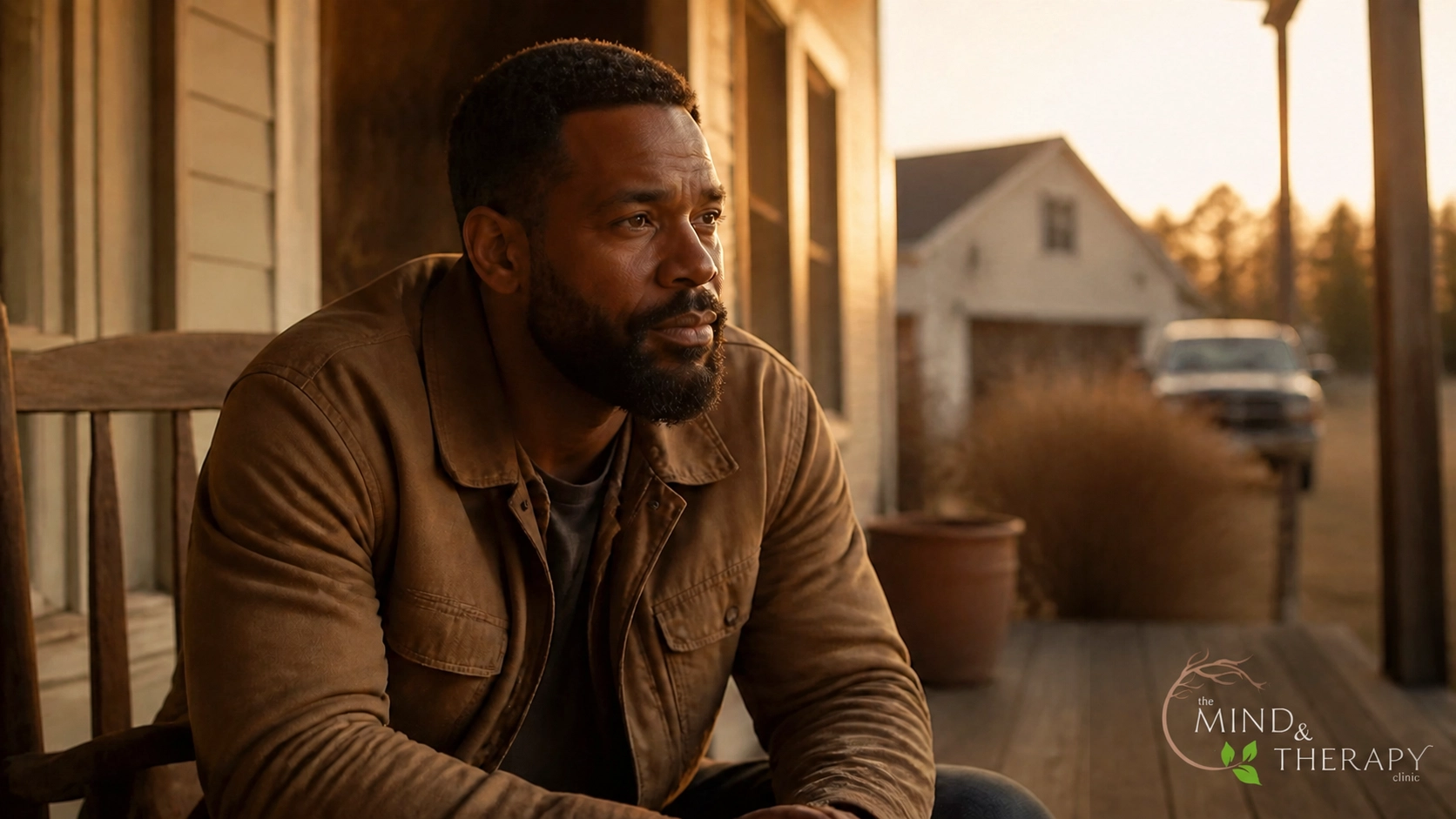
For generations, the "Strong Black Man" has been the gold standard. He’s the one who provides, the one who protects, and the one who never lets anyone see him sweat. He’s the backbone of the family and the pillar of the community. In our culture, stoicism isn’t just a personality trait: it’s seen as a badge of honor.
But here’s the truth that we often keep buried: that armor we’ve been wearing? It wasn’t forged in a place of peace. It was built as a response to pressure, pain, and systemic exclusion. At The Mind and Therapy Clinic, we see it every day. What many call "strength" is actually a deeply ingrained survival mechanism. It’s a trauma response that has been passed down through generations.
If you’re tired of carrying the world on your shoulders while your own spirit is gasping for air, this is for you. It’s time to talk about why being "strong" is actually holding us back from truly living.
The History of the Armor: Why We Became Stoic
To understand why so many Black men lean into stoicism, we have to look at our history. This isn't just about individual choices; it’s about historical trauma. For centuries, Black men in this country had to be stoic to survive. In environments where showing fear, pain, or even too much joy could be met with violence or death, emotional suppression became a literal life-saving skill.
This "survival script" was handed down from fathers to sons. We were taught to keep a "poker face" to navigate a world that often views us as threats. Whether it was the Jim Crow era or the modern-day realities of over-policing and systemic bias, the message has been consistent: Don't show weakness. Don't give them a reason to break you.
While this stoicism helped our ancestors survive unthinkable conditions, it has left us with a legacy of racial trauma that we are still trying to process. When you’re constantly scanning your environment for danger: a state called hypervigilance: you don’t have the luxury of being vulnerable. But survival is not the same as thriving.

Stoicism vs. Healing: When the Mask Becomes a Trap
In the therapy room, Rodrego Way, Licensed Professional Counselor Supervisor, often talks about how this stoicism creates a barrier to genuine healing. If you’ve spent your whole life believing that "real men don’t crack," then the moment you feel a crack forming, you don't seek help: you just try to weld it shut with more silence.
This is the core of "Strong Black Man Syndrome." It’s the internal pressure to:
- Be emotionally invulnerable.
- Minimize your own pain to prioritize others.
- Handle everything yourself without asking for support.
When we treat stoicism as a superpower, we ignore the fact that it is often a sign of BIPOC trauma. Suppressing your emotions doesn’t make them go away; it just drives them deeper into your body. This leads to what researchers call "John Henryism": a strategy of high-effort coping that can lead to physical health issues like hypertension and heart disease, as well as mental health collapses that seem to "come out of nowhere."
The Heavy Price: Suicide and the Crisis of Silence
The most dangerous consequence of this syndrome is that it keeps us from the very resources that could save our lives. We need to have a real conversation about Black men suicide prevention.
Currently, suicide is the third leading cause of death for Black men aged 15–24. Why? Because when we are socialized to view vulnerability as a failure, we don't speak up when the darkness gets too loud. We try to "man up" our way out of a clinical depression or a post-traumatic crisis.
When you combine community trauma recovery needs with a cultural mandate for silence, you get a perfect storm. We see men who are healing from damaging relationships: like men and divorce: who feel they have to "just move on" without processing the grief or the sense of failure. They carry that weight into the next relationship, the next job, and the next decade until the weight becomes unbearable.

Breaking the Cycle: Vulnerability as the New Strength
So, how do we shift the narrative? It starts by recognizing that true strength isn't the ability to stay silent; it’s the courage to be honest.
- Acknowledge the Trauma: Recognize that your stoicism might be a defense mechanism against a world that hasn't always been safe. It’s okay to acknowledge that you’ve been hurt by racial trauma and systemic stress.
- Redefine Masculinity: We need to move away from the idea that being a "Strong Black Man" means being an island. Real strength is found in connection, in brotherhood, and in the ability to say, "I’m not okay, and I need a hand."
- Engage in Trauma Therapy: Traditional therapy hasn't always felt like a safe space for us. That’s why we focus on culturally competent care that understands the unique pressures we face. Trauma therapy isn't about "fixing" you; it's about helping you put down the weights you weren't meant to carry in the first place.
How We Support You at The Mind and Therapy Clinic
At The Mind and Therapy Clinic, we specialize in helping Men of Color navigate the complexities of life: from rebuilding after a divorce to healing from intergenerational pain.
Our approach is casual but clinical. We know that walking into a therapy office can feel like admitting defeat, but we see it as a revolutionary act. When a Black man decides to prioritize his mental health, he isn't just healing himself: he’s breaking a cycle for his children and his community.
Whether you are dealing with the fallout of a bad relationship, the pressure of your career, or the lingering effects of historical trauma, we are here to provide a space where you don't have to be "on." You don't have to be the hero. You just have to be you.

Taking the First Step
You’ve been strong for everyone else for a long time. It’s time to be strong for yourself. Healing doesn’t mean you’re weak; it means you’re ready to live a life that isn't defined by your scars.
If you’re ready to explore what lies beneath the armor, we invite you to reach out. We offer a 15-minute free consultation for first-time clients to see if our approach is the right fit for you. Let’s work together to build a healthy mind, one person at a time.
You’ve carried the storm long enough. It’s time to find your ground.
Click here to schedule your free consultation and start your journey toward true strength.