Historical trauma represents one of the most profound yet often invisible wounds that can ripple through families across generations. Unlike individual trauma that affects a single person, historical trauma describes how massive, population-level traumatic events create lasting psychological, physical, and emotional scars that reverberate through descendants who never directly experienced the original events.
At The Mind and Therapy Clinic, we understand that healing from historical trauma isn't just an individual journey: it's a generational one. When families work together across three generations, they create powerful opportunities for transformation that can break cycles of pain and build lasting resilience.
Understanding Historical Trauma: The Foundation of Generational Healing
Historical trauma occurs when large-scale traumatic experiences affect entire cultural groups, creating wounds that persist across multiple generations. These events include slavery, genocide, war, forced displacement, and systemic oppression that destroy communities and cultural foundations.
The concept emerged from work with American Indian communities whose ancestors experienced colonization and cultural destruction. However, historical trauma affects many populations: Holocaust survivors and their descendants, enslaved Africans and African American communities, and numerous other groups worldwide who faced systematic violence and oppression.
What makes historical trauma unique is its transmission across generations through three key pathways:
Parental attachment disruption – Traumatized parents may struggle to form secure attachments with their children, passing along patterns of fear, hypervigilance, or emotional unavailability.
Cultural destruction – Original traumatic events often destroy protective factors like languages, traditions, spirituality, and community practices, leaving descendants without cultural anchors.
Biological inheritance – Recent research reveals that traumatic experiences can alter DNA through epigenetic changes, meaning descendants may inherit predispositions to stress and anxiety.
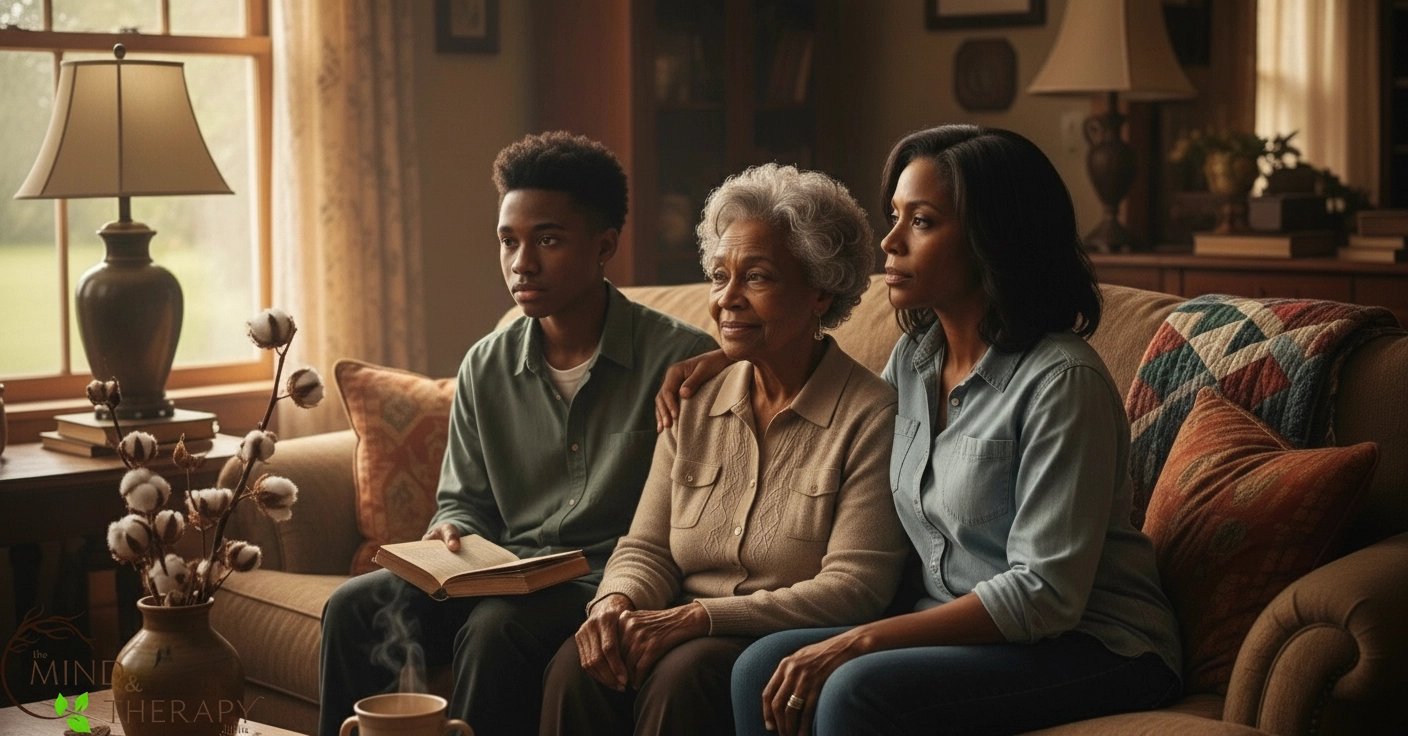
How Three Generations Experience Historical Trauma Differently
Each generation experiences historical trauma in distinct ways, creating both challenges and opportunities for healing:
First Generation: The Carriers of Memory
The oldest living generation often carries the closest connection to original traumatic events, either through direct experience or stories from their parents. They may exhibit:
- Strong survival instincts that helped them endure hardship
- Protective behaviors that can become overprotective
- Difficulty trusting outside systems or institutions
- Deep cultural knowledge mixed with painful memories
Second Generation: The Bridge Builders
The middle generation serves as a crucial link between past and future. They frequently experience:
- Confusion about family patterns they can't fully understand
- Internal conflict between honoring elders and creating change
- Responsibility for both healing their own wounds and protecting their children
- The challenging task of translating cultural wisdom while filtering out trauma
Third Generation: The Pattern Breakers
The youngest generation often shows signs of inherited trauma but also has the greatest potential for transformation:
- Anxiety or depression that seems disconnected from their actual experiences
- Strong intuition about family dynamics and unspoken truths
- Desire to understand their heritage while creating their own identity
- Natural resilience when supported by healing work from previous generations
The Science Behind Generational Trauma Transmission
Understanding how trauma moves through generations helps families approach healing with both compassion and strategy. Epigenetic research shows that traumatic experiences can actually change gene expression, making descendants more sensitive to stress even without direct trauma exposure.
This doesn't mean families are doomed to repeat patterns. Epigenetic changes can also work positively: when one generation heals, they can pass down resilience, emotional regulation, and healthy coping strategies to their descendants.
The key insight is that healing one generation creates ripple effects that benefit all future generations. This makes family-wide healing approaches incredibly powerful and cost-effective in the long term.
A Three-Generation Healing Framework
Successful healing from historical trauma requires coordinated effort across all three generations, with each playing a specific role:
Generation One: Acknowledging and Honoring
The eldest generation begins healing by:
- Sharing their stories in safe, supportive environments
- Acknowledging the trauma their ancestors experienced without minimizing survival strategies
- Identifying cultural strengths that helped the family survive
- Working with trauma-informed therapists who understand historical contexts
Generation Two: Processing and Translating
The middle generation focuses on:
- Understanding family patterns through tools like genograms and family history mapping
- Processing their own trauma responses while maintaining connection to elders
- Learning healthy communication skills to break cycles of conflict or silence
- Developing boundaries that honor family while protecting personal wellbeing
Generation Three: Integrating and Innovating
The youngest generation contributes by:
- Asking questions about family history with curiosity rather than judgment
- Learning cultural practices that connect them to positive aspects of their heritage
- Developing emotional intelligence skills to process inherited sensitivity
- Creating new traditions that blend cultural wisdom with healthy practices
Practical Healing Strategies That Work Across Generations
Family Systems Mapping
Create visual representations of your family system using genograms that include:
- Traumatic events and their timing
- Patterns of behavior, addiction, or mental health challenges
- Cultural strengths and resilience factors
- Relationship dynamics and communication patterns
This process helps all generations see the bigger picture and understand how individual struggles connect to larger family patterns.
Cultural Reclamation Projects
Work together to reconnect with positive aspects of your cultural heritage:
- Research family history and cultural traditions
- Learn ancestral languages or cultural practices
- Connect with community organizations that celebrate your heritage
- Create new traditions that honor the past while supporting current wellbeing
Trauma-Informed Family Therapy
Engage with mental health professionals who understand historical trauma and can facilitate healing across generations. Look for therapists who:
- Have training in historical and intergenerational trauma
- Understand the cultural context of your family's experiences
- Can work with multiple family members and age groups
- Integrate cultural strengths into treatment approaches
Breaking the Silence: Communication Strategies for Healing
One of the biggest barriers to healing historical trauma is the silence that often surrounds painful family history. Breaking this silence requires careful, intentional communication:
Create safe spaces for difficult conversations by establishing ground rules about respect, listening, and taking breaks when needed.
Start small by sharing less threatening family stories before moving to more traumatic material.
Focus on understanding rather than fixing – the goal is to understand family patterns, not to immediately solve all problems.
Honor different perspectives – each generation experienced and processed events differently, and all viewpoints have value.
Use "I" statements to share personal experiences rather than making assumptions about others' experiences.
Special Considerations for Different Types of Historical Trauma
Slavery and Systemic Racism
Families healing from slavery and ongoing systemic racism may need to address:
- Internalized racism and colorism within families
- Economic trauma and limited access to resources
- Medical trauma and mistrust of healthcare systems
- Educational barriers and cultural knowledge gaps
War and Displacement
Refugee and immigrant families may focus on:
- Grief for lost homeland and community connections
- Adaptation stress and cultural identity conflicts
- Documentation and legal status anxiety
- Language barriers and generational differences in acculturation
Genocide and Cultural Destruction
Communities healing from genocide may prioritize:
- Cultural revitalization and language preservation
- Collective memory and historical acknowledgment
- Spiritual and ceremonial healing practices
- Community organizing and advocacy work
Creating Your Family's Healing Plan
Developing a coordinated approach to healing requires planning and commitment from all generations:
- Assessment Phase – Each generation identifies their current challenges and strengths
- Education Phase – Family members learn about historical trauma and its effects
- Processing Phase – Individuals and family units work through specific traumatic material
- Integration Phase – New understanding gets incorporated into daily life and relationships
- Maintenance Phase – Ongoing practices support continued healing and prevent regression
The Role of Community in Generational Healing
Individual families cannot heal historical trauma in isolation. Community support amplifies healing through:
- Validation and normalization of experiences
- Shared resources and knowledge about effective healing approaches
- Cultural preservation and celebration activities
- Advocacy and social justice work that addresses ongoing systemic issues
Consider connecting with community organizations, cultural centers, support groups, and advocacy organizations that understand your family's specific historical trauma.
Moving Forward: Hope for Future Generations
Healing historical trauma across three generations is challenging work, but it's also some of the most important work families can do. When you commit to this healing journey, you're not just addressing past pain: you're creating a foundation for future generations to thrive.
Remember that healing isn't linear, and setbacks are normal parts of the process. What matters is maintaining commitment to the work and supporting each other through difficult moments.
At The Mind and Therapy Clinic, we specialize in trauma-informed approaches that honor cultural contexts while providing effective healing strategies. Our experienced therapists understand the unique challenges of historical trauma and can provide culturally responsive treatment for individuals and families.
Ready to begin your family's healing journey? Contact us at mindandtherapyclinic.com to learn about our specialized trauma therapy services. Together, we can break generational cycles and build the resilience your family deserves.
Remember: You have the power to change what gets passed down to future generations. The work you do today creates healing that ripples forward through time.