
July 18, 2026
When you step through your front door, what’s the first thing you feel?
For many of us, especially Men of Color navigating the current climate, the world outside can feel like a non-stop assault on our peace. Between the weight of political stress, the recurring sting of racial trauma, and the general noise of a society that doesn't always value our rest, we are often in a state of high alert.
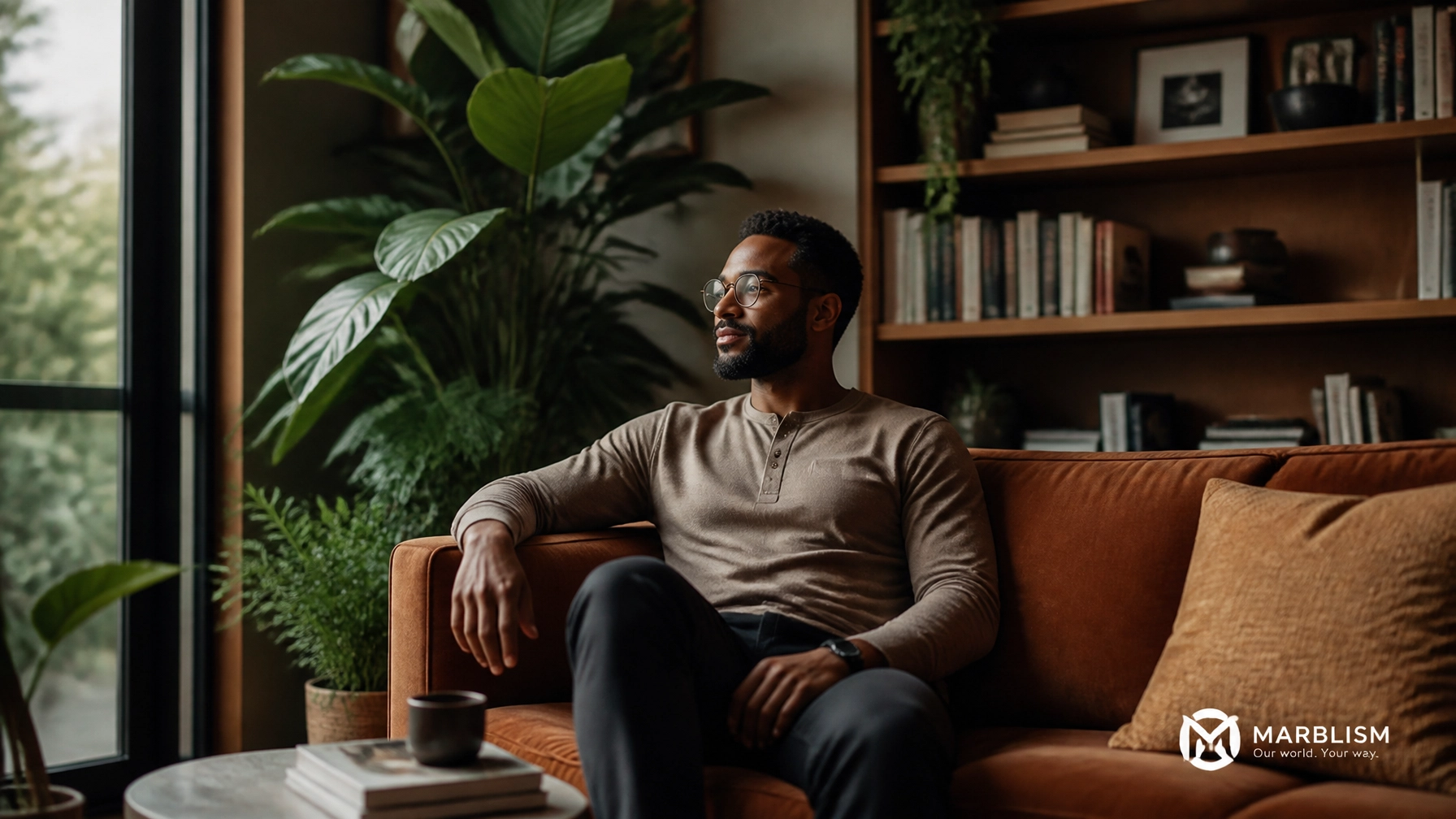
But your home shouldn't be another place where you have to keep your guard up.
At The Mind and Therapy Clinic, we believe that trauma therapy isn't just about what happens in a 50-minute session. It’s about the environment you build for yourself every single day. As Rodrego Way, Licensed Professional Counselor Supervisor, often says, "Healing requires a container: a space where the nervous system can finally stop scanning for threats."
This is post 14 of our Staying Grounded in the Storm series. Today, we’re talking about how to turn your four walls into a true psychological sanctuary.
The Psychology of Space: Why Your Environment Matters
We often think of "sanctuary" as a spiritual concept, but it’s deeply rooted in biology. When we are exposed to community trauma, our brains stay stuck in "survival mode." This chronic activation of the stress response can lead to fatigue, irritability, and health issues.
To heal, your brain needs clear signals that you are safe. When your home is cluttered, loud, or filled with the same digital noise that causes you stress outside, your brain never gets the "all clear" signal. Creating a sanctuary is about intentionally curating these signals.
1. The Sensory Reset: Sight, Sound, and Touch

Creating mental safety starts with the senses. You don’t need a massive renovation to change the "feel" of your home. Start with the basics:
- Earth Tones and Lighting: There’s a reason we use browns, tans, and greens at the clinic. These colors are grounding. At home, try to swap harsh overhead lights for warm lamps or candles in the evening. This signals to your brain that the "work day" is over and the "healing time" has begun.
- Nature as Medicine: Bringing plants into your space isn't just an aesthetic choice. Studies show that being around greenery can lower cortisol levels. It’s a small way to reclaim a connection to the earth, even in an urban environment.
- Tactile Comfort: For men healing from damaging relationships, physical comfort can be a way to reparent ourselves. A heavy blanket, a comfortable chair, or even high-quality cotton sheets can provide the "sensory hug" your nervous system needs after a day of navigating racial trauma.
2. Drawing the Digital Line: Managing Political Stress
One of the biggest intruders in our home sanctuary is the device in our pocket. If you are sitting on your sofa but scrolling through a feed filled with political vitriol or videos of injustice, you aren't actually "home." You are still in the storm.
To protect your peace, consider these boundaries:
- No-Phone Zones: Make the bedroom or the dining table a phone-free area.
- Curated Consumption: You can stay informed without being inundated. Choose one or two trusted sources to check once a day, then put the news away.
- The "Sunset Rule": After a certain hour, the news goes off. Replace the evening news cycle with music, a podcast about growth, or silence.
3. Communication as a Fortress: Black Family Therapy at Home

For those of us with partners and children, a sanctuary isn't just about the furniture: it’s about the energy between people. Black family therapy often focuses on creating "relational safety." This means making it okay to be vulnerable without being judged.
If you’ve been through community trauma recovery, you know that "numbing out" is a common defense mechanism. But in a sanctuary, we move from numbing to noticing.
- Check-ins: Try a daily 10-minute "no-fix" check-in with your partner or kids. Each person shares how they are feeling, and the others simply listen and validate. No advice, no arguments: just witnessing.
- Naming the Stress: Don't be afraid to name what's happening. Saying, "I’m feeling really heavy because of what I saw on the news today," gives your family permission to do the same. It prevents the outside stress from turning into inside conflict.
4. Rituals of Resilience

Rituals are the anchors of a sanctuary. They tell your psyche that you are in control of your time and your spirit. Historically, for Men of Color, rituals have been a vital part of historical trauma recovery: whether through faith, music, or community.
Consider creating a small corner of your home dedicated to grounding. This doesn't have to be religious; it can be a "reflection station" with:
- A photograph of an ancestor or a mentor who represents strength.
- A journal to process the day’s "invisible burdens."
- A candle you light specifically when you are engaging in self-care.
When you light that candle or open that journal, you are telling the world: “You don’t get this part of me. This belongs to my healing.”
5. Intergenerational Safety: Modeling Peace for the Next Generation

One of the most powerful things we can do as Men of Color is to show our sons and daughters that safety is a right, not a luxury. When we take the time to build a peaceful home, we are breaking the cycle of historical trauma.
Working on a project together: like tending to indoor plants or cooking a meal: without the distraction of the outside world, teaches our children that their value isn't tied to their productivity or their struggle. It’s tied to their presence.
Taking the Next Step in Your Journey
Creating a sanctuary is a practice, not a one-time event. Some days, the storm outside will feel like it’s banging on your windows. That’s okay. The goal isn't to live in a bubble, but to have a place to recharge so you can face the world with a clear mind and a steady heart.
If you find that even with a peaceful home, the weight of political stress or racial trauma is too heavy to carry alone, we are here to help. At The Mind and Therapy Clinic, we specialize in helping individuals and families navigate these exact challenges.
Whether you need individual therapy to process personal growth or you're looking for guidance on how to strengthen your family's resilience, our team: led by Rodrego Way, LPC-S: is ready to support you.
Ready to start your transformative journey?
We offer a 15-minute free consultation for all first-time clients. Let’s work together to build a healthy mind and a safe life, one person at a time.
Book Your Free Consultation Today