
![[HERO] Love as a Safe Haven: Creating Emotional Security in a World That Often Feels Unsafe](https://cdn.marblism.com/0x-ubnTEHa8.png)
Let's be real, the world can feel heavy. For Black folks and other BIPOC communities, that weight often comes with an extra layer. From navigating daily microaggressions to processing generational trauma, we're dealing with challenges that can leave us feeling emotionally exhausted and on guard. In a world that often feels unsafe, our relationships need to be the place where we can finally breathe, be ourselves, and feel protected.
But here's the thing: creating that kind of emotional security doesn't happen by accident. It takes intentional work, honest communication, and a commitment to building something different from what the world outside our doors offers us.
Why Emotional Security Hits Different for BIPOC Communities
Emotional security is the feeling that you can show up as your full, authentic self without fear of judgment, rejection, or abandonment. It's knowing that your partner has your back, that your feelings matter, and that mistakes won't be weaponized against you later.
For Black men and other men of color, this kind of safety can feel foreign. We've been taught to be strong, to never show weakness, to keep our emotions in check. Society sends us the message that vulnerability equals weakness, and that's a dangerous narrative that keeps us isolated and struggling in silence.
The reality is that emotional security in loving relationships serves as a buffer against anxiety, stress, and loneliness by offering genuine connection, support, and a sense of belonging, things that become even more critical when you're navigating a world that wasn't built with your well-being in mind.
When you're constantly code-switching at work, dealing with the stress of systemic racism, or carrying the weight of community trauma, having a relationship where you can let your guard down isn't just nice to have, it's essential for your mental health and survival.
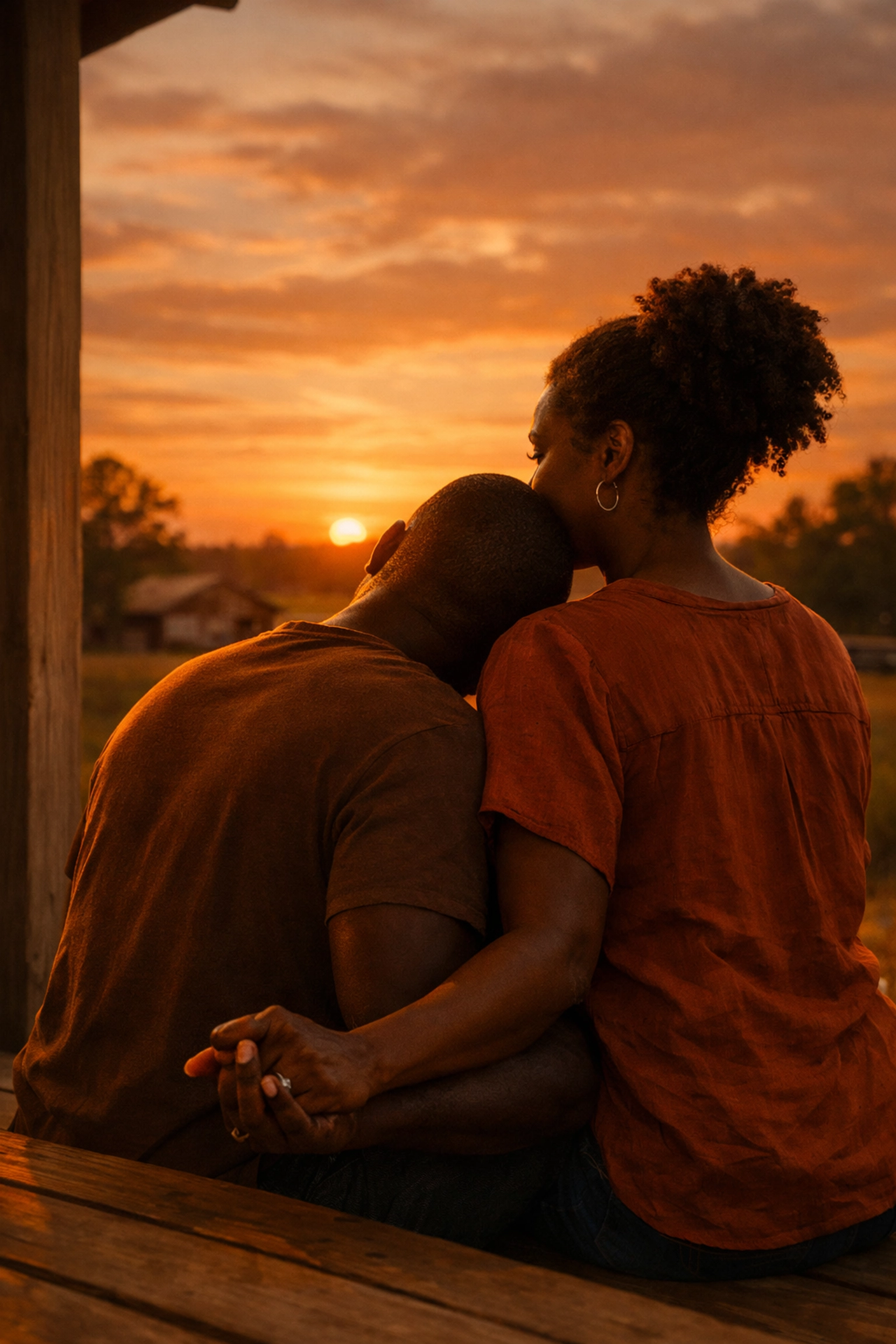
The Real Talk About Communication Barriers
One of the biggest obstacles to emotional security? Communication barriers. And for many of us in BIPOC communities, these barriers run deep.
Maybe you grew up watching the men in your family shut down emotionally. Maybe expressing feelings was seen as "soft" or "too much." Maybe you learned that talking about your struggles meant you were burdening others. These patterns don't just disappear when we enter relationships, they follow us, creating distance between us and the people we love most.
Common communication barriers include:
- The "I'm fine" default: Shutting down instead of opening up when something's wrong
- Conflict avoidance: Walking away from difficult conversations instead of working through them
- Defensive reactions: Taking feedback as personal attacks rather than opportunities for growth
- Emotional unavailability: Being physically present but emotionally checked out
- Assumption-making: Expecting your partner to read your mind instead of clearly stating your needs
Breaking these patterns requires recognizing them first. It means acknowledging that the "strong, silent type" might be protecting you from vulnerability, but it's also keeping you from the deep connection you're craving.
Building Your Safe Haven: Practical Techniques That Work
Creating emotional security isn't about achieving perfection, it's about consistent effort and genuine commitment to each other's well-being. Here are techniques that actually strengthen BIPOC relationships:
1. Practice Radical Honesty (Even When It's Uncomfortable)
Start small. Share one honest feeling each day, even if it feels vulnerable. "I felt stressed today" is better than "I'm fine" when you're not. Open communication involves listening without defensiveness and sharing thoughts and feelings honestly, which creates the foundation for deeper connection.
2. Create Regular Check-In Rituals
Set aside 15 minutes weekly to ask each other: "How are you really doing?" "What do you need from me this week?" "Is there anything weighing on you?" These intentional moments prevent small issues from becoming relationship-ending problems.

3. Honor Boundaries Without Taking Them Personally
Everyone needs space to process, recharge, or just be. Respecting boundaries means understanding and honoring each other's personal limits while maintaining connection. When your partner says they need time alone, that's not rejection, it's self-care.
4. Own Your Part (Accountability is Attractive)
When you mess up, and we all do, take ownership. Accountability means taking responsibility for your words and actions rather than placing blame. A simple "I was wrong, and I'm sorry" without excuses goes further than you think.
5. Support Through Action, Not Just Words
Consistent support means standing by each other through both good times and challenges. Show up for the small stuff: remember important dates, ask about that stressful meeting, offer to handle dinner when they're overwhelmed. Love is in the details.
The Power of Healthy Support Systems
Here's something we don't talk about enough: your relationship can't be your only source of emotional support. That's too much pressure for any partnership to bear.
Building healthy support systems outside your relationship actually strengthens it. This might include:
- Male friendship circles where vulnerability is normalized
- Therapy or counseling (yes, even when things are "fine")
- Faith communities that provide spiritual grounding
- Mentorship relationships that offer wisdom and perspective
- Family connections that honor your roots while allowing growth
When both partners have strong individual support systems, they bring less desperation and more wholeness to the relationship. You're choosing each other from a place of strength, not need.
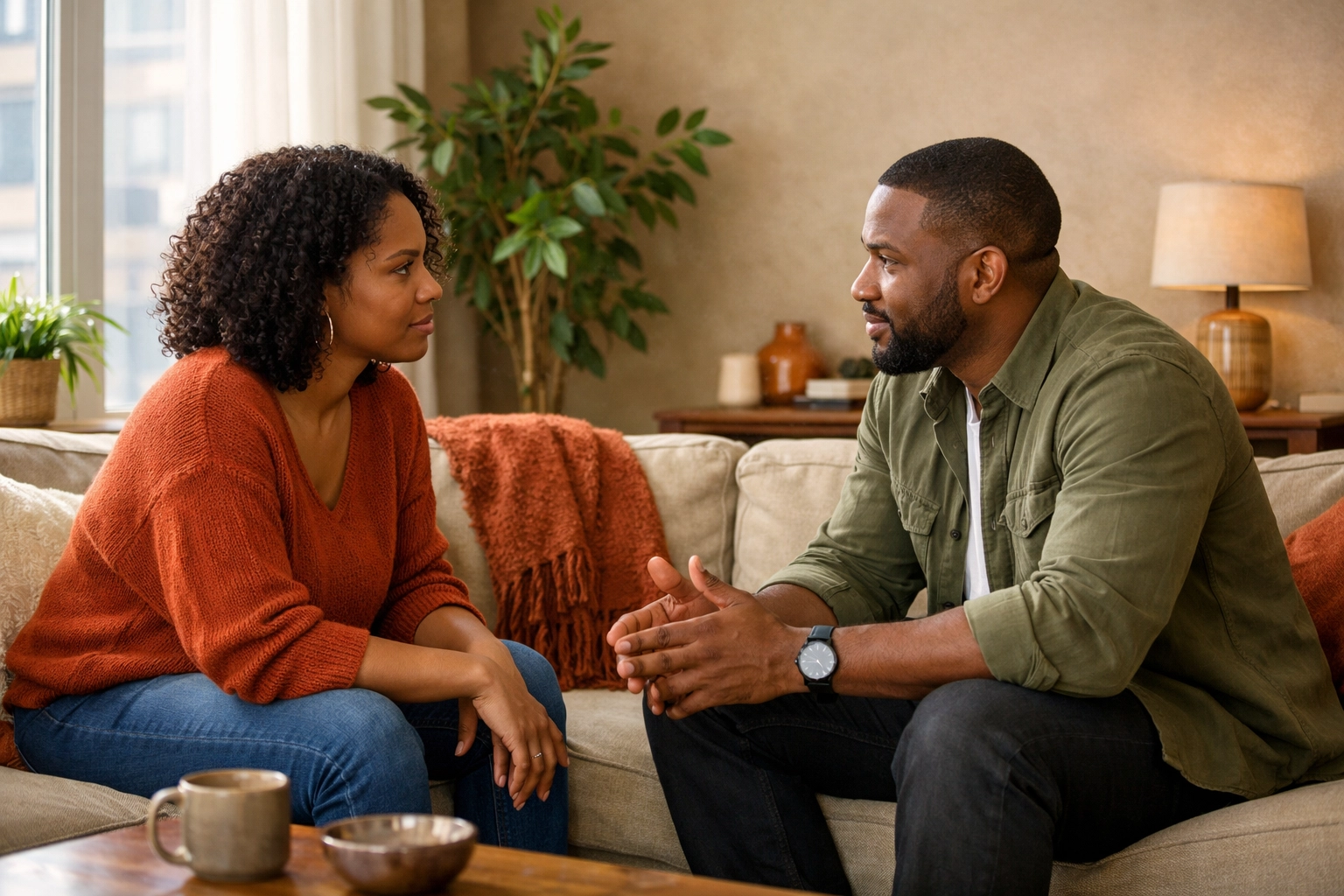
Healing Community and Social Trauma Together
We can't talk about emotional security in BIPOC relationships without addressing the elephant in the room: community-based trauma and social trauma shape how we love.
The trauma of racism, discrimination, and systemic oppression doesn't stay at the door when we come home. It affects how we trust, how we communicate, how we show up for each other. Generational trauma passes down patterns of survival that once protected our ancestors but might now be preventing deeper connection.
Healing this trauma together means:
- Acknowledging how external stressors impact your relationship
- Creating a judgment-free zone to process difficult emotions
- Recognizing when past hurts are being projected onto present situations
- Seeking couples therapy that's culturally informed and trauma-aware
- Building rituals that honor your cultural identity while creating new, healthier patterns
Remember: emotional safety fosters personal growth by encouraging you to take healthy risks and try new things. When you feel secure in your relationship, you're more likely to address the deeper healing work that benefits not just your partnership, but your entire family and community.
Men's Mental Health Matters (Let's Stop Playing)
Let's address this directly: Black men and other men of color are struggling, and the stigma around mental health is literally killing us. We're taught to be providers, protectors, and pillars of strength: but who's protecting our mental health?
Creating emotional security in relationships requires dismantling toxic masculinity narratives that tell us vulnerability is weakness. The truth is that emotional security enhances self-esteem and fosters resilience, enabling you to navigate life's challenges with greater confidence.
When men prioritize their mental health through therapy, honest conversations, and emotional expression, everyone benefits. Your partner feels more connected to you. Your children learn healthier emotional patterns. Your stress levels decrease, and your overall well-being improves.
The "strong man" trap isn't strength: it's isolation wearing a mask. Real strength is asking for help, admitting when you're struggling, and doing the work to heal.
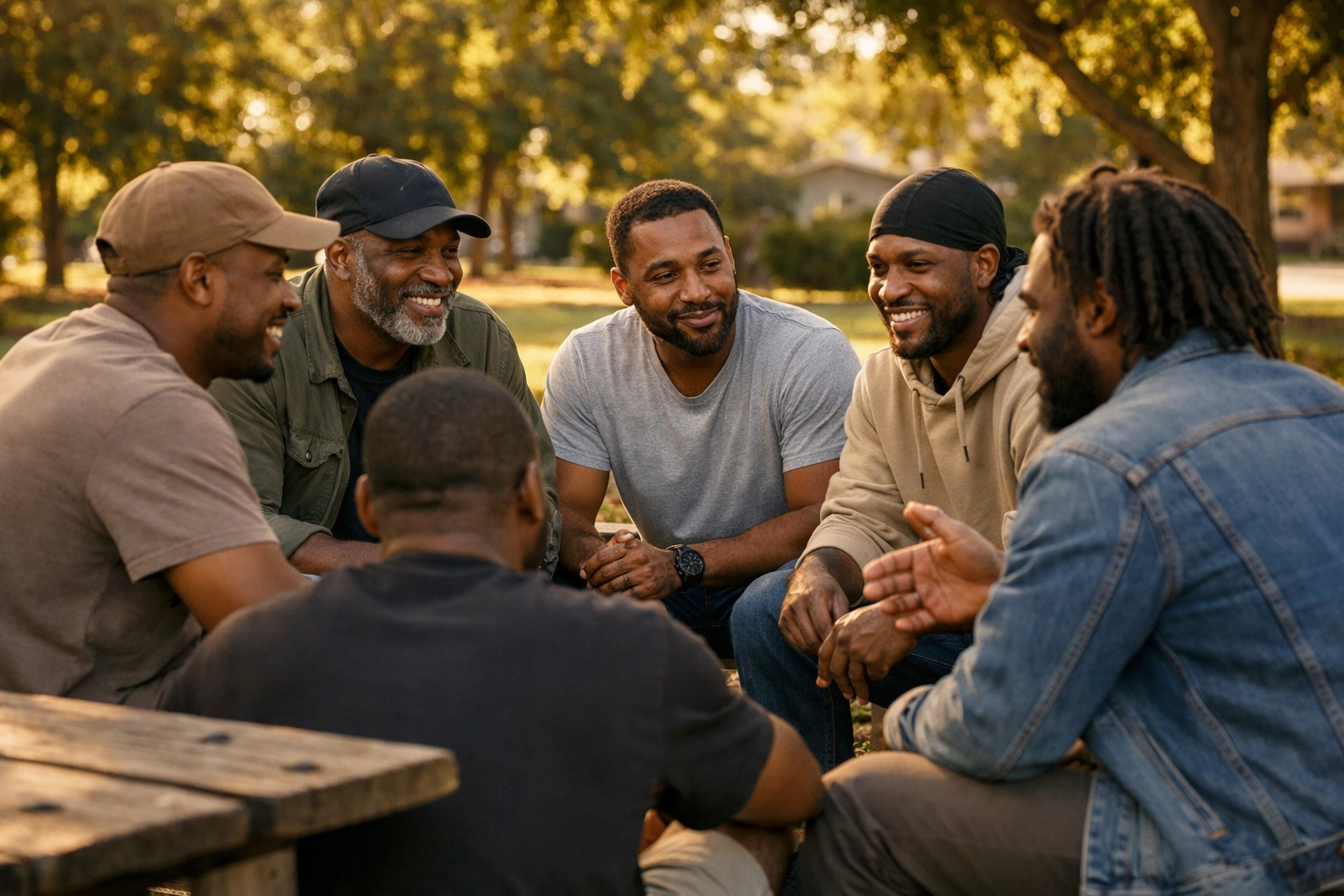
From Surviving to Thriving
Creating love as a safe haven isn't about escaping the world's challenges: it's about building something strong enough to weather them together. It's about transforming your relationship from another source of stress into your greatest source of strength.
When emotional security exists in relationships:
- You communicate more effectively during conflicts
- You experience reduced anxiety and better stress management
- You develop deeper emotional intimacy beyond surface attraction
- You build resilience that helps both partners handle life's challenges
- You create a legacy of healthier relationship patterns for future generations
This work isn't easy, especially when you're fighting against cultural narratives and personal histories that taught you to do the opposite. But it's worth it. Deeper emotional intimacy emerges when safety exists, creating lasting bonds through genuine connection and understanding.
Your relationship can be the place where you're seen, heard, valued, and protected. Where your mental health matters as much as everything else you're carrying. Where love isn't just a feeling: it's a daily practice of choosing emotional security over old patterns that no longer serve you.
Take the Next Step
Building emotional security in your relationship is an ongoing journey, not a destination. If you're ready to create the safe haven you and your partner deserve, we're here to support you.
At The Mind and Therapy Clinic, we specialize in helping Black and BIPOC couples navigate communication barriers, heal from trauma, and build lasting emotional security. Our culturally informed, trauma-aware approach recognizes the unique challenges you're facing and provides practical tools that actually work.
Ready to start your healing journey? Contact us today to schedule a consultation. Your relationship: and your mental health: deserve this investment.
Don't wait until things feel broken to start building something stronger. The time to create your safe haven is now.
Posted in: Relationships, Men's Mental Health, Couples Therapy, BIPOC Mental Health
Tags: emotional security, Black relationships, men's mental health, communication in relationships, trauma-informed therapy, BIPOC couples, relationship healing
Subscribe to our newsletter for more insights on building healthier relationships and prioritizing mental health in the Black community.
Leave a comment below: What does emotional security look like in your relationship? What barriers are you working to overcome?
The Mind and Therapy Clinic
Rodrego Way, LPC-S, LCDC
Licensed Professional Counselor Supervisor & Chemical Dependency Counselor
Creating safe spaces for healing, one relationship at a time.