
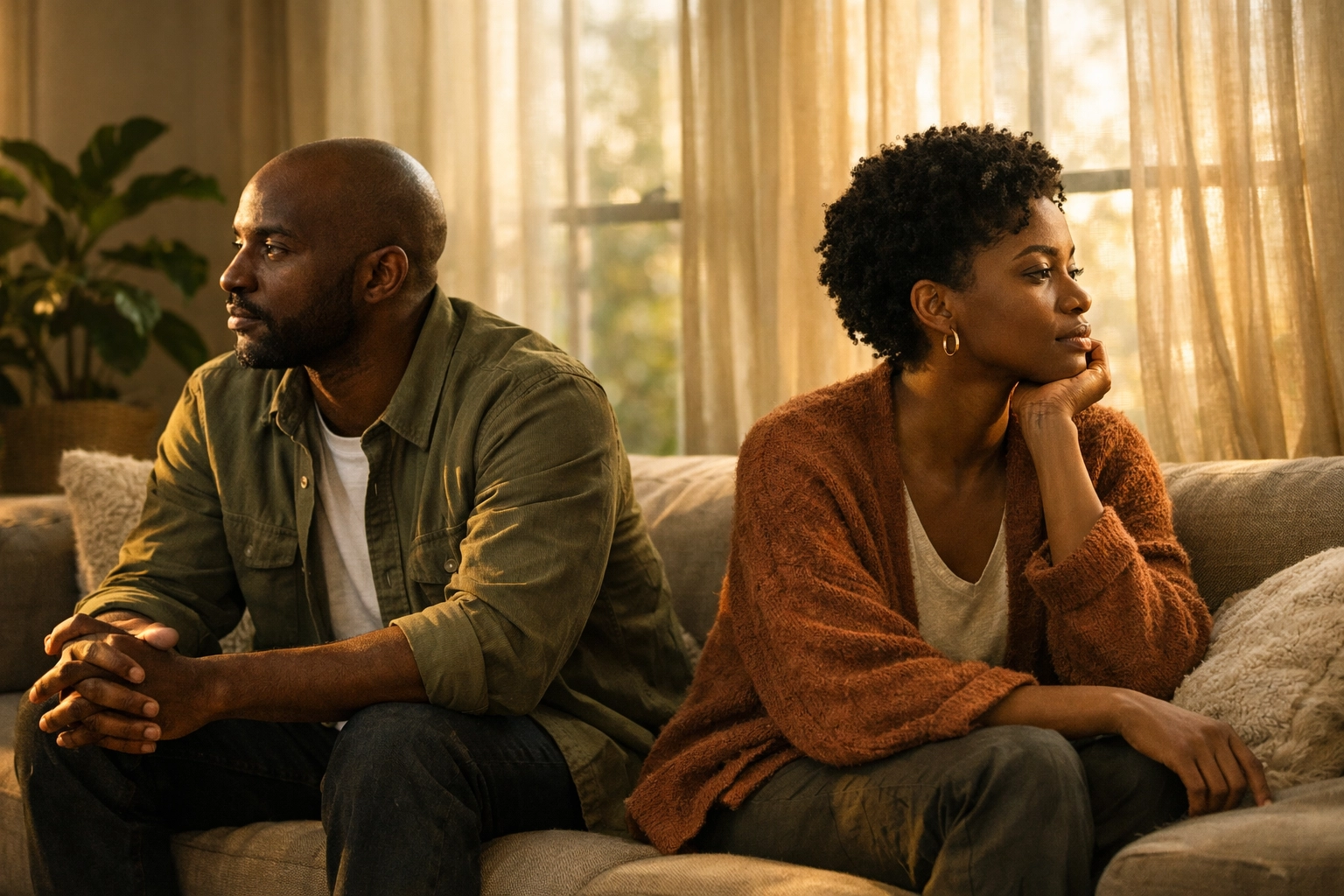
You know that moment when you're arguing with your partner about something small, like dishes or being late, and suddenly it feels way bigger than it should? Like there's this invisible weight pressing down on both of you?
That weight? It might not even be yours.
I'm Rodrego Way, a Licensed Professional Counselor Supervisor here at The Mind and Therapy Clinic, and I've spent years helping couples untangle the invisible threads connecting their relationship struggles to generations of unhealed pain. What many people don't realize is that couples therapy isn't just about fixing communication or reconnecting, it's often the first real opportunity to break cycles that have been running through your family tree for decades.
Let me explain how this works and why your relationship might be the key to healing way more than just the two of you.
The Invisible Inheritance: What Is Generational Trauma?
Generational trauma refers to emotional wounds, coping patterns, and survival responses passed down through family lines. These aren't just stories your grandmother told you, they're deeply embedded ways of being that show up in how you love, fight, protect yourself, and connect with others.

Here's what this looks like in real relationships:
- Emotional shutdown when things get tense (because vulnerability wasn't safe in your family)
- Hypervigilance about money, loyalty, or safety (inherited from ancestors who faced real threats)
- Difficulty trusting your partner's intentions (because betrayal or abandonment ran through your family history)
- Explosive anger over small things (because generations before you couldn't express their rage safely)
Research shows that about 50% of people seeking therapy for relationship issues are simultaneously struggling with unresolved generational trauma. That's half of all couples sitting in therapy rooms across the country, carrying wounds they didn't create but definitely feel.
Why Couples Therapy Is the Perfect Entry Point
Here's something I tell couples all the time: your relationship is both the place where generational trauma shows up most clearly AND the safest place to start healing it.
Why? Because in couples therapy, you're not alone. You have a partner who's committed to understanding you, and you have a trained guide (that's me) helping both of you see patterns you couldn't see on your own.
You're Healing Together, Not Solo
Individual therapy is powerful, but there's something uniquely transformative about doing this work alongside your partner. When both of you understand how your family histories shaped you, blame turns into compassion. "Why do you always shut down?" becomes "Oh, I see why that's your protection response."
That shift: from judgment to understanding: is where healing begins.
The Relationship Becomes a Laboratory for Change
In couples therapy, we don't just talk about your patterns: we practice new ones in real time. You learn to:
- Communicate needs without triggering each other's trauma responses
- Recognize when you're reacting to old wounds versus what's actually happening now
- Build safety so vulnerability becomes possible
- Repair ruptures quickly instead of letting them calcify into resentment
These skills don't just improve your relationship. They become the new blueprint you pass down to your kids, your community, your legacy.
How We Actually Break the Cycles in Therapy
Let me walk you through what this process looks like at The Mind and Therapy Clinic. This isn't abstract: it's practical, real work that changes lives.
Step 1: Identifying Your Trauma Patterns
First, we map out where your reactions are coming from. This involves exploring your family-of-origin experiences: not to blame your parents or grandparents, but to understand the survival strategies that made sense in their context but might not serve you now.
I might ask questions like:
- How did your family handle conflict growing up?
- What messages did you receive about emotions, especially anger or sadness?
- When you felt scared or hurt as a child, what happened?
- What were the "rules" about trust, loyalty, or independence in your family?
When you start connecting the dots between your childhood experiences and your current relationship patterns, everything clicks into place. Suddenly, your partner's "annoying habit" of checking in constantly makes sense: it's not control, it's the anxiety passed down from a grandparent who lost everything and needed to feel secure.
Step 2: Building Safety and New Communication Skills
Generational trauma thrives in environments where people don't feel safe to be vulnerable. So we create that safety intentionally.
This includes:
- Establishing boundaries around how you talk to each other during conflict
- Learning "I" statements instead of blame language
- Practicing active listening where both partners feel genuinely heard
- Developing emotional regulation skills so you can stay present instead of shutting down or exploding
These aren't just "good communication tips": they're trauma-informed strategies that help your nervous system feel safe enough to actually connect instead of defend.
Step 3: Understanding Each Other's Stories
One of the most powerful moments in couples therapy happens when partners really hear each other's trauma histories: not just the facts, but the emotional truth underneath.
When your partner understands that your difficulty with trust stems from your father's abandonment, or that your need for control comes from childhood chaos you couldn't predict or manage, empathy replaces frustration. You stop taking things personally and start responding to each other with compassion.
This is where couples therapy becomes family therapy: because you're not just healing your relationship, you're healing the wounds your families of origin couldn't address.
Step 4: Creating New Patterns Together
Here's the really exciting part: once you've identified the old patterns and built new skills, you get to consciously create a different family culture.
You decide together:
- How will we handle conflict in our home?
- What values do we want to center in our family?
- How will we talk about emotions with our kids?
- What traditions do we keep, and what cycles do we intentionally end?
This is where generational trauma stops. With you. In your relationship.
The Ripple Effect: Healing Beyond Your Relationship
When couples do this work, the impact extends far beyond the two people in the room. Children growing up in homes where parents have addressed their generational trauma experience:
- Secure attachment because their parents can be emotionally present
- Healthy conflict resolution modeling instead of silent treatments or explosions
- Permission to feel all emotions, not just the "acceptable" ones
- Clear communication about needs and boundaries
You're literally changing your family tree: past, present, and future.

What to Look for in a Therapist
Not all couples therapy is equipped to handle generational trauma. When you're looking for support, seek out therapists who:
- Have training in trauma-informed approaches
- Understand cultural and historical trauma (especially important for BIPOC couples)
- Use evidence-based methods like the Gottman Method, Emotionally Focused Therapy (EFT), or Cognitive Behavioral Therapy (CBT)
- Create space for both partners to feel heard and validated
- Help you connect present-day patterns to family-of-origin experiences
At The Mind and Therapy Clinic, we specialize in exactly this kind of work: helping couples untangle the past so they can build the future they actually want.
Your Relationship Can Be the Healing Ground
If you're reading this and thinking, "Wait, this sounds like us," you're not alone. So many couples come to therapy thinking they just need to "communicate better," only to discover there's a much deeper story underneath their struggles.
The good news? You don't have to carry what wasn't yours to begin with. And you don't have to pass it down to the next generation.
Couples therapy becomes the first step in breaking generational cycles because it gives you the tools, the safety, and the support to do something different. Together.
Ready to start healing your family tree?
If you and your partner are ready to break cycles and build something new, I'd love to support you. At The Mind and Therapy Clinic, we offer couples therapy specifically designed to address generational trauma, cultural wounds, and the complex patterns that show up in intimate relationships.
Contact us to schedule a consultation, or visit our services page to learn more about our approach.
The Mind and Therapy Clinic
Rodrego Way, LPC-S, LCDC
Licensed Professional Counselor Supervisor
Leave a Comment
Have you noticed generational patterns showing up in your relationship? What cycles are you working to break? Share your thoughts below.
Subscribe to Our Newsletter
Get more insights on trauma, healing, and building healthier relationships delivered to your inbox.
Posted in: Couples Therapy, Trauma Healing, Family Therapy
Tags: generational trauma, couples therapy, family therapy, breaking cycles, trauma-informed therapy, relationship healing