Let me be real with you for a second: I've sat across from countless Black men and women who genuinely love their partners but can't figure out why their relationships keep hitting the same walls. They're doing the work, showing up, trying their best: but something keeps them stuck in patterns that don't serve them.
Here's what I've learned after years of doing this work: it's not about loving harder. It's about understanding how the weight we carry as BIPOC folks shapes the way we love in the first place.
The Weight We Carry Into Our Relationships
Social trauma isn't just what happened to you personally. It's the accumulation of what's happened to us: as a community, as a people, across generations. It's the racism your grandfather faced that taught him not to trust. It's the community violence that made your mother hypervigilant. It's the systemic discrimination that keeps you on edge, even in your own home.
When we talk about trauma in BIPOC communities, we're talking about layers. There's the historical stuff: slavery, forced displacement, cultural erasure. There's the everyday stuff: microaggressions at work, being followed in stores, "the talk" you have to give your kids about police. And there's the community trauma: the violence, the poverty, the lack of resources that impact entire neighborhoods.
All of this? It doesn't just live in our minds. It lives in our bodies, our nervous systems, and yes: our relationships.
From "Us Against the World" to "Me Against You"
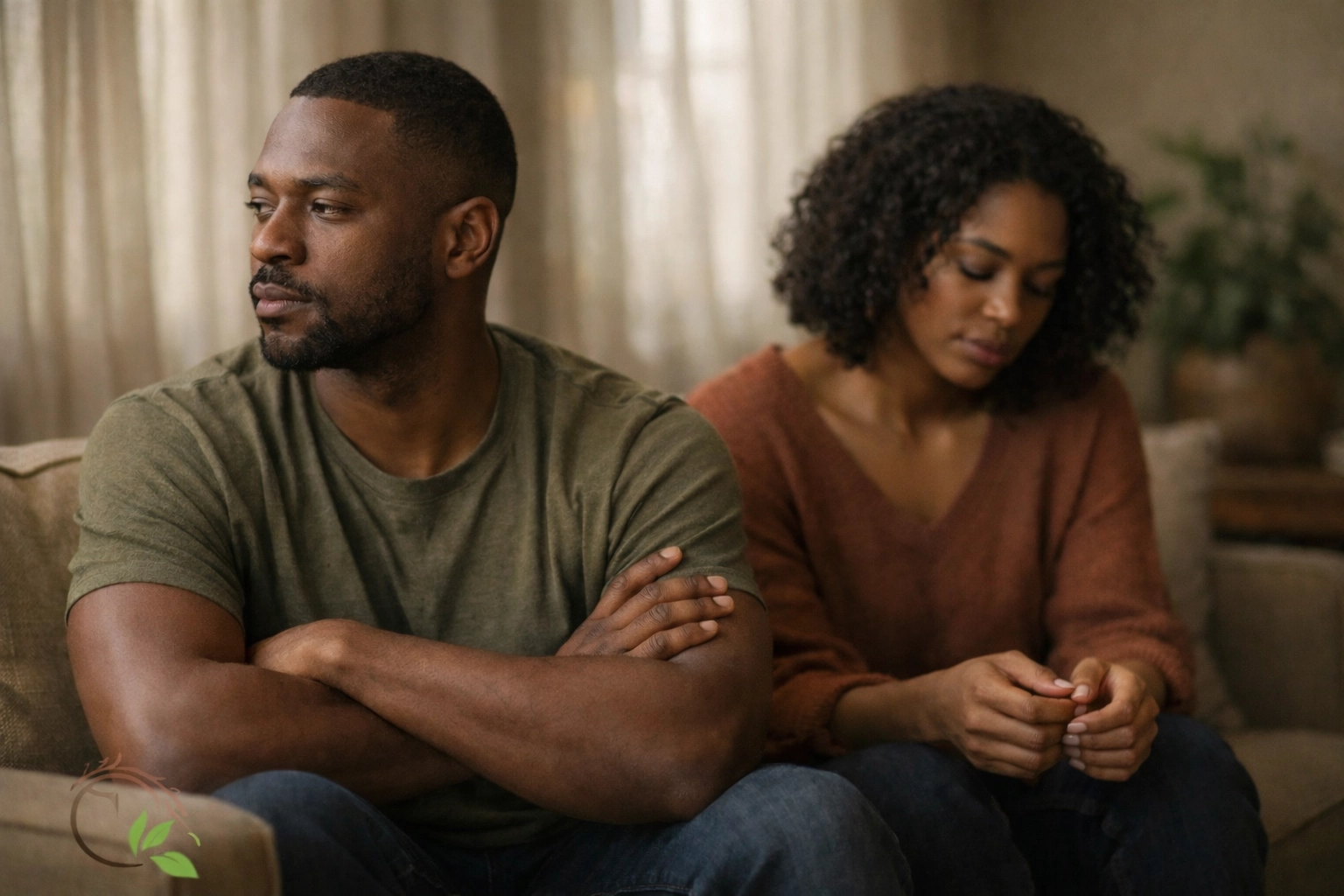
Here's where it gets tricky. Social trauma teaches us to survive. It activates our fight-or-flight response so often that we start operating from that place even when we're safe. Research shows that trauma survivors often remain in a state of helplessness and struggle to establish trust: and these patterns extend directly into our romantic relationships.
Think about it: if the world has taught you that danger is around every corner, that people in authority can't be trusted, that showing vulnerability gets you hurt: how do you then turn around and be fully open with your partner?
You don't. At least not easily.
Instead, what happens is this: The same survival mechanisms that protected you out there in the world start showing up in your bedroom, at your dinner table, during those late-night conversations where real intimacy should happen.
The Three Ways Survival Mode Hijacks Connection
1. We Build Walls When We Need Bridges
Some of us become anxiously attached: constantly seeking reassurance, terrified of abandonment, reading threats where there aren't any. Others swing the opposite way, building emotional fortresses that keep everyone at arm's length. Both are adaptations to a world that felt unsafe. Both make genuine connection nearly impossible.
2. Our Emotions Run Hot or Cold: No In-Between
Social trauma keeps our nervous systems on high alert. That means small disagreements can feel like full-blown attacks. A forgotten text becomes evidence they don't care. A critique feels like rejection. We either explode or shut down completely: there's no middle ground where healthy communication lives.
3. We Stop Seeing Our Partners Clearly
When you've been hurt enough times, your brain starts looking for threats even in safe spaces. You might interpret your partner's need for alone time as abandonment. Their constructive feedback sounds like an attack. Their silence feels like rejection. It's not intentional: it's your trauma trying to keep you safe by keeping you guarded.
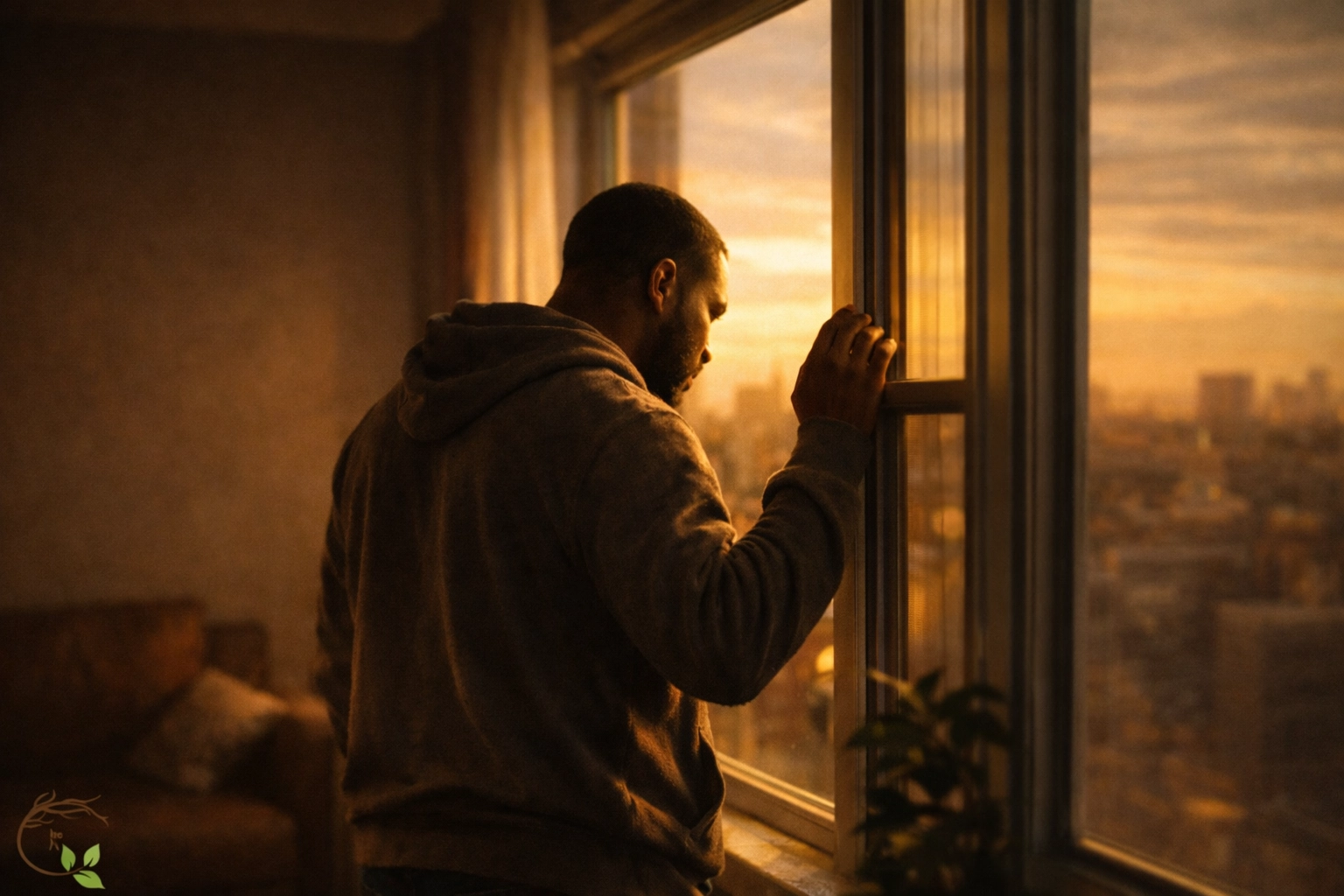
The Shift: From Surviving to Thriving
Here's the good news I give every couple that walks through my door: this isn't permanent. The patterns you've developed are adaptations, not who you are. And just like you learned to survive, you can learn to connect.
But it requires a fundamental shift in how you approach your relationship.
Stop Treating Your Partner Like the Enemy
I know how the world treats us. I know you've had to be strong, suspicious, ready to defend yourself at a moment's notice. But if you bring that same energy home: if your partner becomes just another person you have to protect yourself from: you'll never experience the safety that real love offers.
Your relationship should be the one place where your armor comes off. Not all at once (healing isn't linear), but gradually, intentionally, with someone who's earned your trust.
Recognize Your Triggers (And Communicate Them)
Social trauma creates specific triggers. Maybe it's tone of voice that reminds you of being talked down to. Maybe it's feeling controlled because you've had so little control in other areas of life. Maybe it's the silence that feels like the emotional neglect you experienced growing up.
Whatever it is, name it. Share it with your partner. Help them understand that when you react strongly, it's not always about what just happened: it's about everything that's happened before.
Build the Village You Deserve
Research shows that strong social support actually moderates the negative effects of trauma on our ability to form healthy attachments. Translation: you need your people.
Black love doesn't happen in isolation. We need community, accountability partners, friends who understand the unique pressures we face. We need spaces where we can process community trauma collectively, not just individually.
This might mean couple's therapy. It might mean joining a men's group. It might mean finding a church, community center, or support network that gets it. Whatever form it takes, connection heals what isolation damages.

Practical Steps to Take Your Love Back
Start With Awareness
You can't change what you don't acknowledge. Spend time reflecting on how social trauma shows up in your relationship. Do you withdraw when things get tough? Do you pick fights to create distance? Do you struggle to accept love even when it's offered?
Create Safety Rituals
Establish regular practices that signal to your nervous system: "You're safe here." This could be a weekly check-in where you both share how you're really feeling. It could be a physical ritual: holding hands before difficult conversations, taking three deep breaths together when tensions rise.
Practice Emotional Regulation
Learn to notice when you're escalating. Develop tools to bring yourself back to baseline before engaging. This isn't about suppressing your emotions: it's about choosing when and how to express them so you're heard instead of creating more conflict.
Seek Professional Support
Sometimes the patterns run too deep to untangle alone. Therapy that specifically addresses trauma and attachment issues can help you interrupt defensive cycles and build healthier patterns. This isn't weakness: it's wisdom.
Celebrate Small Wins
Notice when you choose connection over protection. When you stay present instead of shutting down. When you ask for what you need instead of expecting your partner to read your mind. These moments matter. They're proof that you're healing.
The Truth About Healing
Here's what I tell my clients: healing from social trauma doesn't mean the world suddenly becomes safe. It means you develop the skills to maintain connection even in an unsafe world. It means your relationship becomes a refuge instead of another battlefield.
It means you stop letting past pain determine your present love.
The research is clear: while trauma creates lasting challenges in relationships, these patterns aren't permanent. With intentional work: both individual and relational: you can move from survival-based responses to genuine connection.
But it requires honesty. It requires vulnerability. It requires believing that you deserve the kind of love that doesn't require you to keep your guard up 24/7.
Ready to do this work? At The Mind and Therapy Clinic, we specialize in helping BIPOC individuals and couples navigate the unique intersection of social trauma and relational health. We understand that your love story is shaped by more than just personal history: it's influenced by collective experiences that deserve to be honored and healed.
Contact us today to schedule a consultation. Let's shift your relationship from survival to connection: together.
Posted in: Relationships, Men's Mental Health, Trauma Recovery
Tags: trauma, community-trauma, black-males, counseling, therapy
The Mind and Therapy Clinic
Rodrego Way, LPC-S, LCDC
Licensed Professional Counselor Supervisor
Licensed Chemical Dependency Counselor