Let's be real: when the world feels heavy, your relationship feels it too. Between police violence, systemic racism, economic inequality, and the everyday microaggressions that chip away at your peace, Black couples and BIPOC families carry a weight that's hard to name but impossible to ignore. And here's the thing: you're not just dealing with your individual pain. You're navigating community trauma and social trauma together, as a unit.
But what if I told you that this shared struggle could actually become a source of strength? That healing together isn't just possible: it's powerful?
At The Mind and Therapy Clinic, we've walked alongside countless couples who've turned their collective pain into purpose, their trauma into transformation. Today, we're breaking down how you and your partner can navigate community trauma together and come out stronger on the other side.
What Is Community and Social Trauma Anyway?
Community trauma isn't about one isolated incident: it's the accumulated weight of living in a world that wasn't built with your wellness in mind. It's the grief after another hashtag becomes a trending topic. It's the anxiety your partner carries when they leave the house. It's the inherited pain from generations who survived but couldn't always heal.
Social trauma shows up in your relationship even when you don't talk about it. It's in the silence after watching the news together. It's in the tension that rises when your partner withdraws because they're trying to "stay strong." It's in the fights that aren't really about the dishes: they're about feeling powerless in a world that demands so much from you both.
For BIPOC couples, this trauma is both personal and collective. You're healing yourselves while also carrying the wounds of your community, your ancestors, and the broader fight for justice and equity.
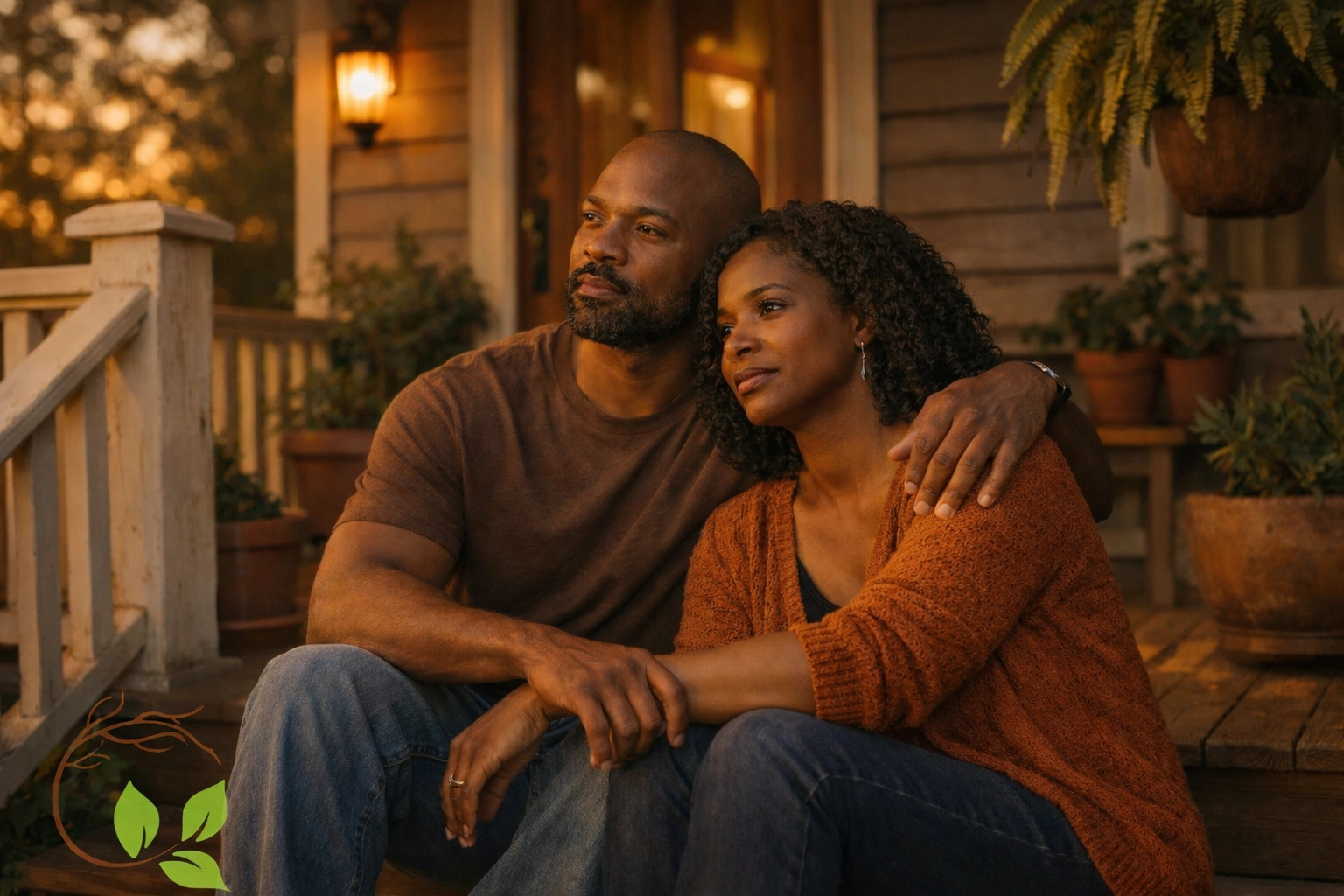
When Both Partners Are Hurting: Understanding Dual-Trauma Dynamics
Here's something therapists call dual-trauma dynamics: when both you and your partner are experiencing trauma responses at the same time. Maybe you've both witnessed community violence. Maybe you're both grieving the loss of someone who looked like you. Maybe you're both exhausted from code-switching and performing just to survive in spaces that don't value your full humanity.
When both partners are triggered simultaneously, it creates unique challenges:
- You might both shut down emotionally at the same time, leaving no one to hold space
- Anger can escalate quickly because you're both in fight-or-flight mode
- One partner's pain can trigger the other's, creating a cycle of reactivity
- You might feel guilty for needing support when you know your partner is hurting too
But here's the flip side: couples who navigate trauma together often develop deeper empathy, stronger communication skills, and an unshakeable bond. You're not just partners: you're witnesses to each other's pain, co-creators of your healing journey.
Building Safety Together: Your First Step
Before you can heal the big stuff, you need to create safety in your relationship. And I'm not talking about physical safety (though that's essential too): I'm talking about emotional safety. The kind where you can be vulnerable without fear of judgment. Where you can say "I'm not okay" without your partner shutting down.
Here's how to start building that safety:
Recognize Your Patterns
Pay attention to how trauma shows up in your communication. Does one partner withdraw while the other pursues? Do you both get defensive when discussing difficult topics? Understanding these patterns is the first step to changing them.
Practice Emotional Regulation
You can't pour from an empty cup. Learn to recognize when you're in a trauma response (racing heart, shallow breathing, feeling disconnected) and develop tools to regulate your nervous system. Deep breathing, grounding exercises, and taking breaks during heated conversations can help both partners return to a calmer state.
Co-Regulate Together
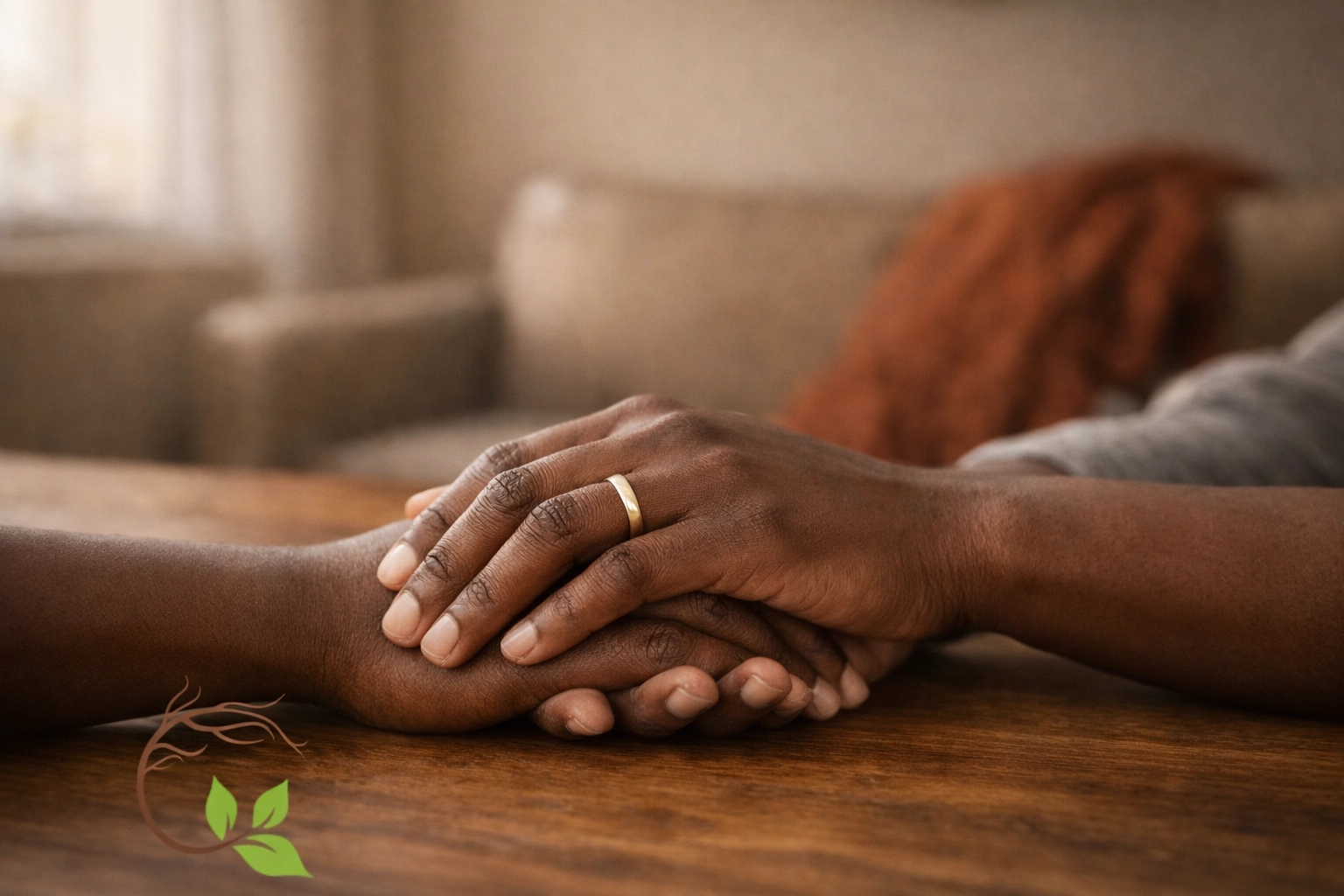
This is powerful: your nervous systems can actually help calm each other. Holding hands during a difficult conversation, synchronized breathing, or even just sitting close while you process emotions can help both partners feel more regulated and connected.
Turning Your Pain Into Purpose
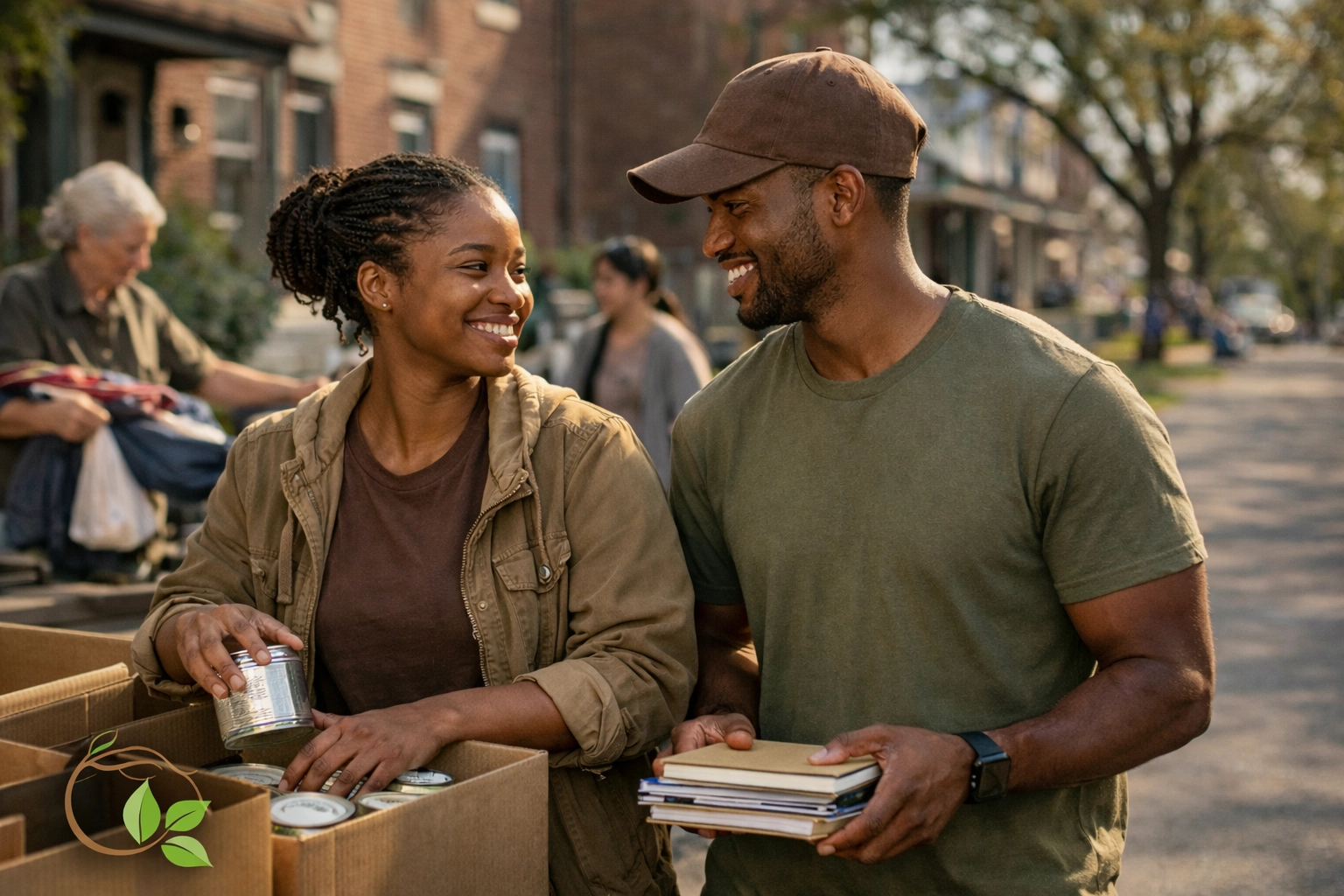
One of the most healing things couples can do is transform their trauma into meaningful action. This doesn't mean you have to become activists (though you can). It means finding ways to channel your pain into something that creates change: for yourselves, your family, or your community.
Research shows that couples who engage in what's called post-traumatic growth together build stronger relationships. This might look like:
- Starting a support group for couples facing similar challenges
- Mentoring younger couples in your community
- Advocating for policy changes that address the systems causing harm
- Sharing your story to help others feel less alone
- Creating art, music, or writing that processes your collective experience
One couple I worked with lost a family member to police violence. Instead of letting that grief destroy them, they started a scholarship fund in his name and now mentor young Black men in their community. They told me, "The trauma isn't the end of our story: it's the beginning of a new one."
That's the shift. That's the power of healing together.
Creating Your Support Circle
You can't heal in isolation, and your relationship shouldn't be your only source of support. BIPOC couples need a comprehensive support system that includes:
Therapy That Gets It
Work with a therapist who understands the specific experiences of Black and BIPOC communities. At The Mind and Therapy Clinic, we specialize in trauma-informed care that acknowledges the reality of living while Black or brown in America. We don't need you to explain racism: we get it, and we're here to help you heal from it.
Community Connections
Find your village. Whether it's a faith community, cultural organization, or informal friend group, surrounding yourselves with people who share your experiences reduces isolation and provides practical support.
Couples Groups
There's something powerful about being in a room with other couples who understand what you're going through. Group therapy or support groups allow you to practice new communication skills, witness others' healing, and realize you're not alone in this struggle.
Wellness Practices
Don't underestimate the healing power of movement, mindfulness, and self-care. Couples who practice yoga together, take walks in nature, or develop shared wellness routines often report feeling more connected and grounded.
Strengthening Your Bond Through Collective Healing
As you navigate community trauma together, something beautiful can happen: your relationship transforms from a source of stress into a source of healing. You develop confidence that you can handle difficult emotions and maintain connection through challenges.
Here's what strengthened bonds look like:
Enhanced Communication
You learn to share feelings without blame: "This morning I felt hopeful; last night I felt discouraged." This emotional honesty deepens intimacy and helps both partners feel seen.
Greater Resilience
When you've weathered storms together, you trust that you can handle whatever comes next. This builds a foundation of resilience that carries you through future challenges.
Shared Purpose
Working together toward healing: whether that's personal, familial, or community-focused: gives your relationship deeper meaning beyond the day-to-day routine.
Modeling for Others
Your children, family members, and community members watch how you navigate trauma together. You become a living example of what healthy, healing relationships look like.
Practical Steps to Start Today
Ready to begin this journey? Here are some concrete actions you can take right now:
-
Have the Conversation: Set aside time to talk honestly about how community trauma is affecting your relationship. No blame, no fixing: just listening.
-
Identify Your Triggers: Each partner shares what situations, news events, or interactions tend to trigger trauma responses.
-
Create a Safety Plan: Develop a plan for how you'll support each other during difficult times. What do you each need? What helps you feel grounded?
-
Find Your People: Research support groups, therapy options, or community organizations that align with your needs and values.
-
Choose One Action: Pick one small way you can channel your pain into purpose together. Start small: healing is a marathon, not a sprint.
You Don't Have to Do This Alone
Navigating community and social trauma as a couple isn't easy, but it's one of the most important journeys you'll take together. At The Mind and Therapy Clinic, we're here to support you every step of the way with trauma-informed couples therapy that honors your experiences and empowers your healing.
Whether you're just starting to acknowledge how trauma affects your relationship or you're ready to dive deep into healing work, we're here for you.
Ready to start your healing journey together? Contact us today to schedule a consultation. Your relationship: and your community: deserves this investment.
Posted in: Mental Health
Tags: Couples Therapy, Community Trauma, BIPOC Mental Health, Relationship Healing, Social Trauma
Subscribe to our newsletter for more insights on mental health, relationships, and healing in the Black community.
Leave a Comment: How has community trauma affected your relationship? What's helped you and your partner stay connected through difficult times? Share your story below.
The Mind and Therapy Clinic
Rodrego Way, LPC-S, LCDC
Licensed Professional Counselor Supervisor
Licensed Chemical Dependency Counselor