

You've tried everything. The family dinners where everyone stares at their phones. The "how was your day" questions met with one-word answers. The concerned parent conversations that somehow always end in slammed doors.
If you're raising a Black male teen, you know this dance all too well. But here's what most parents don't realize: the communication strategies that work in couples therapy? They're absolute game-changers for connecting with your teen and strengthening your entire family system.
At The Mind and Therapy Clinic, I've seen how applying couples therapy techniques to family dynamics creates breakthroughs that traditional parenting approaches miss entirely. Let me show you what's really happening: and how to fix it.
The Real Reason Your Teen Stays Silent
Before we dive into solutions, let's talk about what's actually going on. Your Black teen isn't shutting down because they're difficult or disrespectful. They're navigating something much deeper.
Research shows that Black teens often carry mistrust of mental health professionals and inherited skepticism about opening up: especially to authority figures. Add in the cultural narratives many of us grew up with about "keeping family business private" and "being strong," and you've got a perfect storm of silence.
But here's the thing: that silence isn't weakness. It's protection. And understanding that shifts everything.
Your teen is processing experiences with racism, discrimination, and code-switching that you might not even know about. They're carrying the weight of being "the only one" in their classes or dealing with microaggressions that accumulate like papercuts. When they walk through your door, they're exhausted: and they need connection, not interrogation.
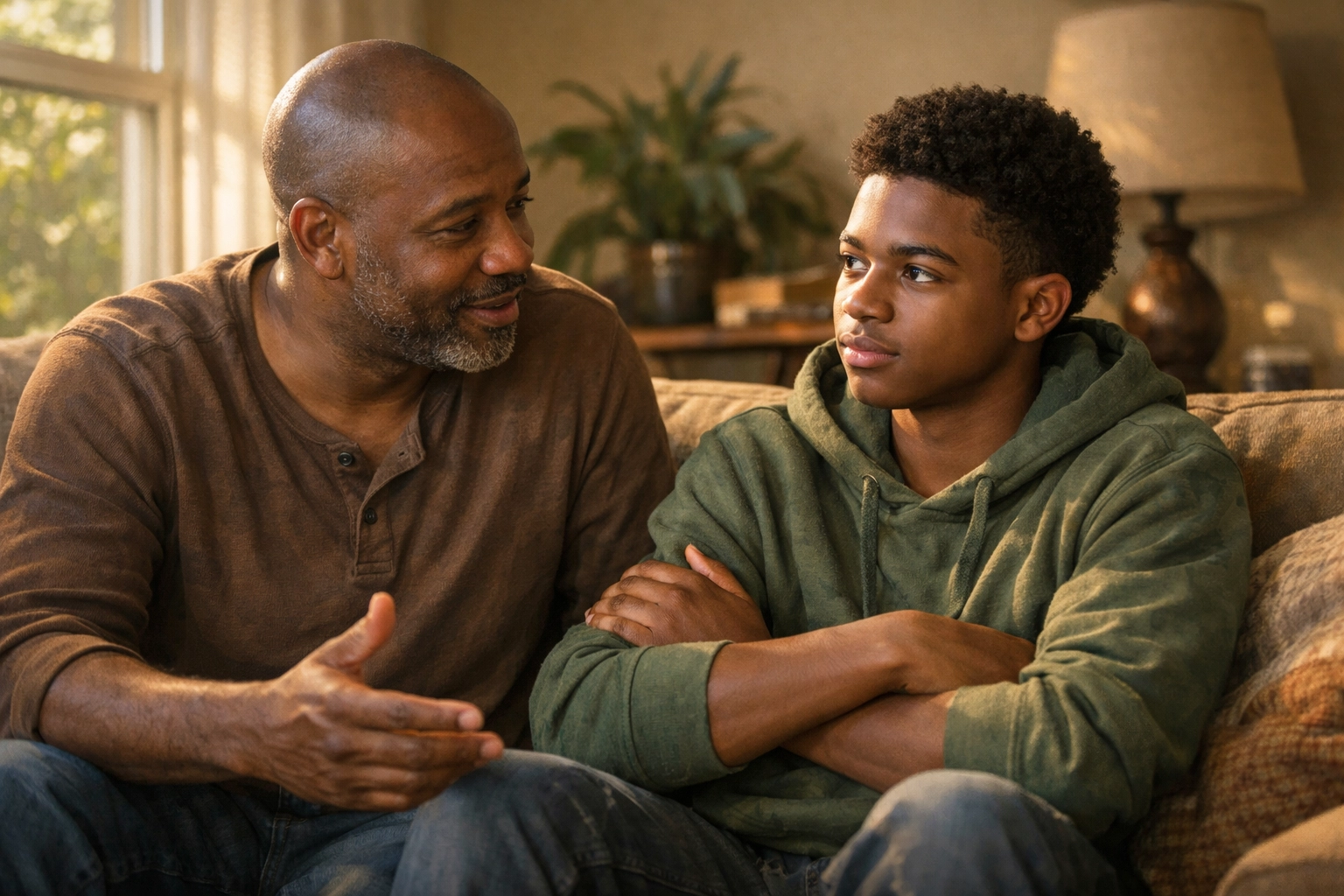
How Couples Therapy Strategies Change Everything
You might be thinking, "What does couples therapy have to do with my teenager?" Everything, actually. The communication skills that help romantic partners reconnect work beautifully for parent-teen relationships: especially when cultural awareness is baked in.
Here are seven couples therapy strategies that I've adapted for families dealing with adolescent therapy challenges:
1. Master the Art of Active Listening Without Fixing
In couples therapy, we teach partners to listen without immediately jumping to solutions. Your teen needs the exact same thing. When they finally do open up about something: a friendship drama, a teacher who said something racist, whatever: your first instinct might be to fix it or give advice.
Don't.
Instead, try this: "That sounds really hard. Tell me more about that." Reflect their emotions back: "You seem frustrated about how that went down." Ask open-ended questions that show genuine curiosity, not judgment.
This isn't about being passive. It's about creating safety first. Black male teens especially need to know their experiences will be validated before they'll go deeper.
2. Learn Your Emotional Language Together
One powerful couples therapy technique involves expanding emotional vocabulary beyond "fine" and "mad." Many Black families: mine included: weren't taught extensive emotional language growing up.
Make it a family project. Create a feelings chart. Watch movies together and pause to name what characters might be feeling. Use humor and storytelling (we're great at both) to make it less awkward.
When your teen says they're "stressed," help them get more specific: Is it anxious? Overwhelmed? Pressured? Disappointed? The more precise the language, the better everyone communicates.
3. Practice Vulnerability First
Here's a couples therapy secret that transforms families: whoever wants more vulnerability has to model it first. You can't demand your teen open up while you keep your struggles private.
Share age-appropriate challenges from your own life. Talk about how you handled (or mishandled) discrimination at work. Admit when you're stressed or uncertain. Let them see that opening up isn't weakness: it's strength.
This is especially crucial in Black families where we've had to project strength for survival. Breaking that pattern intentionally creates permission for your teen to do the same.

4. Address the Elephant: Intergenerational Trauma
Couples work through how their families of origin shaped their relationship patterns. Family therapy does the same thing: but includes your teen in understanding how racism, discrimination, and historical trauma impact all of you.
Have honest conversations about what you experienced growing up as a Black person in America. Acknowledge how that might have shaped your parenting style. Explore together how these collective wounds show up in your family dynamics.
This isn't about blame. It's about context. When your teen understands that your "don't trust anyone" warnings come from real experiences with systemic racism, they get why you parent the way you do. And you better understand why they might resist that same messaging.
5. Rewrite Family Roles and Expectations Together
In couples therapy, partners renegotiate roles and expectations as their relationship evolves. Your family needs the same flexibility as your teen matures.
Have an actual conversation about what "respect" means to each person. Discuss cultural expectations: like academic achievement or career paths: without assuming agreement. Let your teen weigh in on family rules that affect them.
Black male teens, in particular, face rigid societal expectations about masculinity and behavior. Creating space at home to question and redefine roles gives them breathing room they desperately need.
6. Implement Weekly Family Check-Ins
Couples therapists often recommend regular relationship check-ins. Adapt this for your family: designate one meal per week (or whatever works) where everyone shares a high, a low, and something they need support with.
Keep it structured but relaxed. No phones. No lectures. Just sharing and listening. If your teen says their low was "nothing," that's okay: consistency builds trust. They'll open up when they're ready.
The magic happens when these check-ins become routine and safe. Your teen starts anticipating that space where their voice matters.
7. Seek Cultural Fit in Professional Support
One of the most important factors in couples therapy success is cultural competence from the therapist. The same goes for family therapy and adolescent therapy with Black male teens.
When you're ready to bring in professional support, request therapists who either share your cultural background or demonstrate strong cultural competence. Ask directly about their experience with Black families and their approach to addressing racism's impact on family dynamics.
At The Mind and Therapy Clinic, we understand how critical this fit is. A therapist who gets the unique challenges Black families face: without you having to explain basic concepts about discrimination or code-switching: changes the entire therapeutic experience.
The Ripple Effect: Strengthening Beyond Your Immediate Family
Here's what makes these strategies so powerful: they don't just improve communication with your teen. They transform how your entire family system operates.
When parents learn these couples therapy-based communication skills, they naturally use them with each other, with younger kids, even with extended family. Your teen watches adults in their life practice vulnerability and active listening, creating a new family culture around emotional honesty.
The research backs this up: when family members participate actively in therapy and practice these skills at home, the benefits ripple outward into the community. Your teen takes these communication tools to their friendships. You use them at work. Everyone becomes better at navigating difficult conversations.
Moving Forward: Your Next Steps
If your Black teen isn't opening up, remember: it's not personal, and it's not permanent. It's a communication gap that these proven strategies can bridge.
Start small. Pick one strategy from this list and implement it this week. Maybe it's the family check-in, or maybe it's just practicing active listening when your teen mentions something in passing.
Pay attention to what works. Black male teens and therapy don't have to be an uphill battle when you're using approaches designed to honor their experiences and cultural context.
And if you're feeling stuck or need more guidance, that's exactly what family therapy and couples therapy-informed family work is for. We help translate these strategies into your specific family dynamic.
Ready to Rebuild Connection?
The silence doesn't have to continue. At The Mind and Therapy Clinic, I work with Black families navigating these exact challenges, using culturally informed approaches that actually work.
Whether you're looking at family therapy, adolescent therapy for your teen, or want to strengthen your co-parenting relationship, we're here to help. Licensed and experienced in working with BIPOC families, I understand the unique intersection of cultural identity, family dynamics, and healing.
Contact us today to schedule a consultation. Let's turn that silence into conversation, and those walls into bridges. Your family's breakthrough might be one conversation away.
Posted in: Family Therapy, Adolescent Counseling, Cultural Wellness | Tags: Black male teens and therapy, couples therapy, family therapy, adolescent therapy, Black families, parenting teens, family communication
Rodrego Way, LPC-S, LCDC | Owner/Therapist | The Mind and Therapy Clinic
Subscribe to our newsletter for more insights on family healing and culturally informed therapy approaches.