
There's an unspoken rule that many Black men grow up learning: stay strong, no matter what. This expectation shapes how they navigate the world, from career challenges to family dynamics. But when it comes to romantic relationships, this pressure to remain stoic: even when things are falling apart: can quietly chip away at mental health in ways that often go unnoticed until the damage runs deep.
Relationship stress affects everyone. But for Black men specifically, the cultural weight of appearing invincible creates a unique psychological burden that deserves honest conversation and real solutions.
The Cultural Mandate of Strength
From a young age, many Black men receive messages about what it means to be a man in their community. Be the provider. Be the protector. Don't show weakness. These expectations aren't inherently negative: strength and resilience are admirable qualities. However, when these traits become absolute requirements rather than options, problems emerge.
Research consistently shows that societal expectations and the pressure to always appear strong take a serious psychological toll on Black men. This cultural mandate manifests as a reluctance to seek help. One study participant captured this reality perfectly: "We Black men don't like to get help…Black men just keep it bottled in" because "men are supposed to be strong and can bear everything."
This internalization of the "strong" label means that instead of seeking support during difficult times, many Black men bury their struggles. They fear judgment. They worry about rejection. They believe that admitting to relationship problems somehow diminishes their worth as men.

How Relationship Stress Shows Up Differently
Relationship difficulties represent a significant source of stress for Black men, yet this stress often looks different than what mental health professionals typically expect. Study participants have identified relationship dynamics: including co-parenting challenges, communication breakdowns, and navigating family expectations: as major stressors in their lives.
Many responses in research reflect internalized perceptions of racial stereotyping within close relationships. Black men often find themselves managing complex family dynamics while simultaneously serving as protectors and providers: all while navigating systemic inequalities that add additional layers of pressure.
Here's what relationship stress might look like for Black men:
- Irritability and short temper rather than visible sadness
- Withdrawal from family and friends disguised as being "busy"
- Physical symptoms like headaches, back pain, or fatigue
- Increased substance use as a coping mechanism
- Overworking to avoid dealing with relationship problems at home
- Emotional numbness or feeling disconnected from partners
For Black men, depression often doesn't manifest as crying or isolation in the ways society typically recognizes. It can show up as anger, exhaustion, or even chronic physical pain. This makes it easier to dismiss these symptoms as something other than mental health concerns.
The Hidden Cost of Suppression
The combination of the "strong" label and relationship stress creates a dangerous dynamic where emotional pain goes unexpressed and untreated. When a relationship is struggling: whether it's conflict with a partner, divorce proceedings, custody battles, or simply growing apart: the expectation to "handle it" silently can be overwhelming.
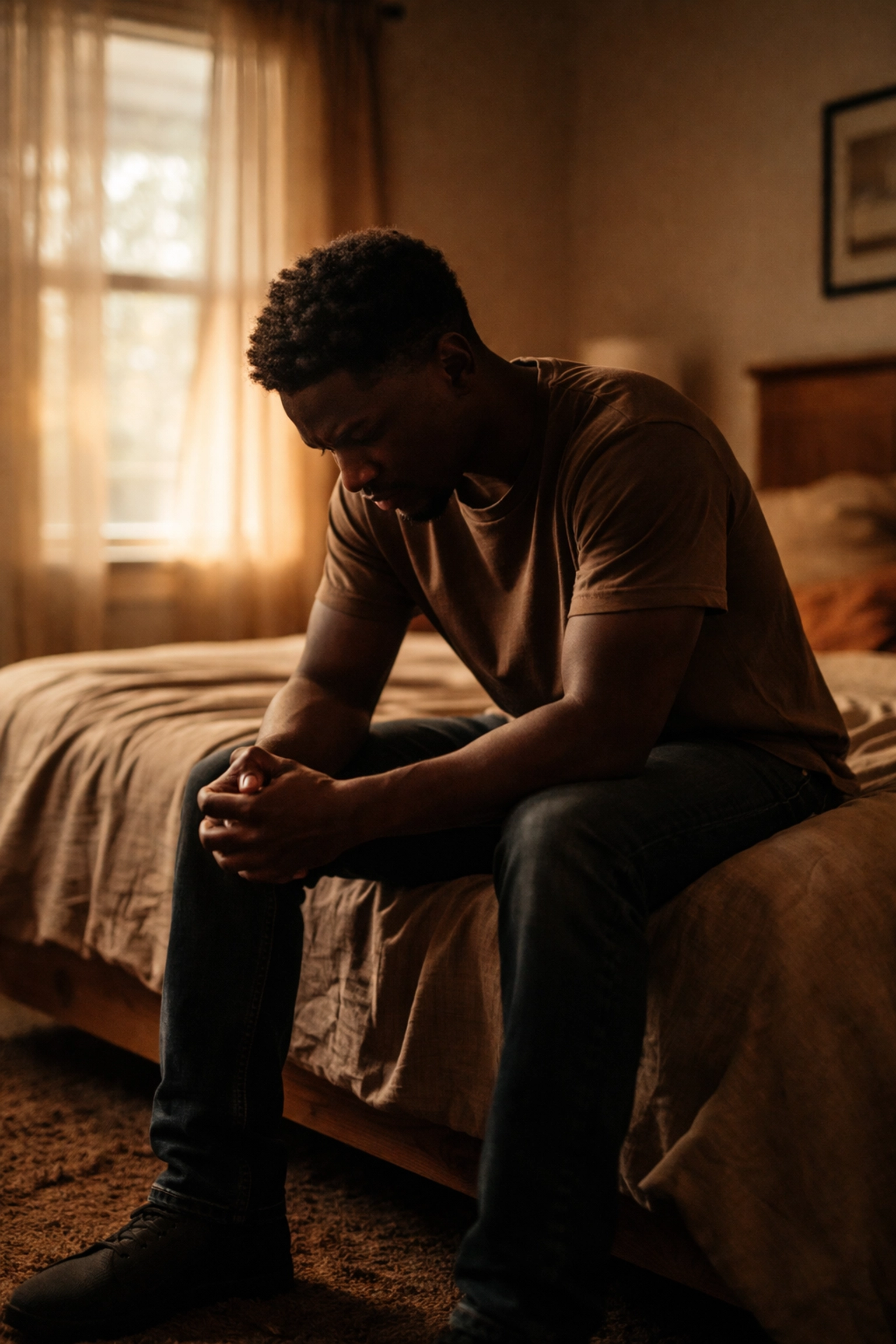
Research reveals troubling statistics: over half of young Black men in one study reported depressive symptoms, with those reporting higher perceived stress having significantly higher odds of reporting depression. Yet Black men are significantly less likely to seek therapy compared to their white counterparts, despite experiencing comparable or higher levels of distress.
This suppression doesn't just disappear. It manifests in other ways:
- Strained relationships become even more strained
- Communication breaks down further
- Trust issues compound over time
- Self-esteem takes repeated hits
- Parenting can become affected by unresolved emotional baggage
The failure to address these interconnected stressors: relationship difficulties combined with the cultural prohibition against seeking help: perpetuates a cycle that affects not only individual mental health but also family and community well-being.
Breaking the Silence: Individual Therapy as a Safe Space
Here's the truth that often goes unspoken: seeking help is not weakness. It's actually one of the strongest decisions a person can make. Individual therapy provides something that many Black men rarely experience: a completely private, judgment-free space to process relationship stress.
In a therapeutic setting, there's no need to perform strength. There's no audience requiring stoicism. There's simply a trained professional whose only job is to help you work through what you're experiencing.

Individual counseling offers several specific benefits for addressing relationship stress:
Confidential Processing
Everything discussed in therapy stays in therapy. This privacy allows for honest exploration of feelings that might feel impossible to share with family, friends, or partners.
Developing Healthy Communication Skills
Many relationship problems stem from communication breakdowns. Therapy provides tools and strategies for expressing needs, setting boundaries, and navigating difficult conversations.
Understanding Patterns
Sometimes relationship stress follows patterns established in childhood or previous relationships. A therapist can help identify these patterns and develop healthier approaches.
Managing Stress Without Harmful Coping Mechanisms
Therapy offers alternatives to suppression, overworking, or substance use as ways to cope with relationship difficulties.
Building Emotional Intelligence
Understanding and managing emotions isn't something most people are taught. Therapy provides education and practice in this crucial life skill.
Taking the First Step
Recognizing that relationship stress is affecting your mental health takes courage. Doing something about it takes even more. But the alternative: continuing to carry the weight of the "strong" label while relationships struggle and mental health erodes: isn't sustainable.
Consider these questions:
- Do you find yourself constantly irritable or on edge at home?
- Have you been avoiding difficult conversations with your partner?
- Do you feel exhausted even when you've had enough sleep?
- Are you using alcohol, work, or other distractions to avoid thinking about your relationship?
- Do you feel like you're going through the motions rather than actually living?
If any of these resonate, it might be time to explore support options.

You Don't Have to Carry This Alone
The pressure to appear strong doesn't have to mean suffering in silence. Addressing trauma and stress from relationship difficulties isn't a sign of weakness: it's an investment in your mental health, your relationships, and your future.
At The Mind and Therapy Clinic, we understand the unique pressures facing Black males in today's society. Our approach creates space for honest conversation about relationship stress, cultural expectations, and the path toward genuine wellness.
The "strong" label doesn't have to be a prison. Real strength includes knowing when to seek support and having the courage to take that first step.
Ready to start the conversation? Contact The Mind and Therapy Clinic to schedule a confidential consultation. Your mental health matters.
Posted in: Mental Health, Relationships
Tags: Black Males, Therapy, Counseling, Depression, Trauma