
Relationships are the cornerstone of emotional well-being. For Black men navigating the complexities of modern society, the health of their relationships, romantic, familial, and platonic, plays a significant role in their overall mental resilience. Yet, relationship challenges often go unaddressed, silently eroding the foundation that supports their emotional strength.
This post explores why healing relationships (or healing from them) is not just beneficial but essential for Black male resilience. Whether you are working through past wounds or building healthier connections moving forward, understanding this process can be transformative.
The Weight Relationships Carry
Relationships do not exist in a vacuum. They are shaped by personal history, cultural expectations, and societal pressures. For Black men, these factors can create unique challenges that complicate how they connect with others.
Consider the following realities:
- Historical trauma passed down through generations affects how trust and vulnerability are experienced
- Societal expectations of masculinity often discourage emotional openness
- Systemic racism creates chronic stress that spills into personal relationships
- Cultural norms may stigmatize seeking help or expressing feelings
When relationships become strained or toxic, the impact extends far beyond the partnership itself. Unresolved relationship issues can manifest as anxiety, depression, isolation, and a diminished sense of self-worth.

How Trauma Shows Up in Relationships
Past trauma, including childhood experiences, abuse, or exposure to violence, creates specific obstacles that prevent healthy connections from forming. For many Black men, these obstacles include:
- Trust issues: Difficulty believing that others have good intentions
- Communication challenges: Struggling to express needs, feelings, or boundaries
- Emotional unavailability: Shutting down or becoming numb to avoid vulnerability
- Intimacy problems: Fear of closeness or difficulty maintaining deep connections
These patterns often develop as survival mechanisms. At some point, they served a protective purpose. However, in the context of adult relationships, they can reinforce isolation rather than foster resilience.
Research indicates that childhood trauma directly challenges emotional intimacy and trust in romantic relationships. This creates ongoing stress, compounded by societal pressure on Black men to conform to narrow definitions of masculinity.
Breaking the Cycle: Why Healing Matters
Healing is not about forgetting the past or pretending wounds do not exist. It is about understanding how those wounds shape current behaviors and making intentional choices to respond differently.
When Black men engage in relationship healing, they gain tools that extend far beyond their partnerships:
- Self-awareness: Understanding personal triggers and patterns
- Emotional regulation: Managing responses rather than reacting impulsively
- Healthier communication: Expressing needs clearly and listening actively
- Stronger boundaries: Knowing where one person ends and another begins
Breaking generational trauma starts with awareness. It requires creating safe spaces for open, honest conversations, both with partners and with oneself.

Practical Strategies for Relationship-Based Resilience
Relationship healing does not happen overnight. It requires consistent effort and, often, professional guidance. Here are evidence-based strategies that support the process:
1. Create and Maintain Healthy Boundaries
Boundaries are not walls. They are guidelines that protect your emotional well-being while allowing genuine connection. Healthy boundaries include:
- Communicating your limits clearly
- Saying no without guilt
- Recognizing when others are overstepping
- Respecting the boundaries of your partner
2. Model the Behavior You Want
Relationships are reciprocal. If you want openness, practice being open. If you want respect, demonstrate respect. This approach shifts the dynamic from blame to accountability.
3. Ensure Shared Values
Partnerships thrive when both individuals are working toward compatible goals. Take time to discuss:
- Long-term aspirations
- Views on family, finances, and career
- How each person defines success and fulfillment
Honoring each other's dreams creates a foundation of mutual support.
4. Engage in Self-Reflection
Healing requires looking inward. Consider journaling, meditation, or simply setting aside time to examine your thoughts and feelings. Questions to explore include:
- What patterns do I notice in my relationships?
- How do I respond when I feel threatened or vulnerable?
- What beliefs about relationships did I inherit from my family or community?

The Power of Community and Professional Support
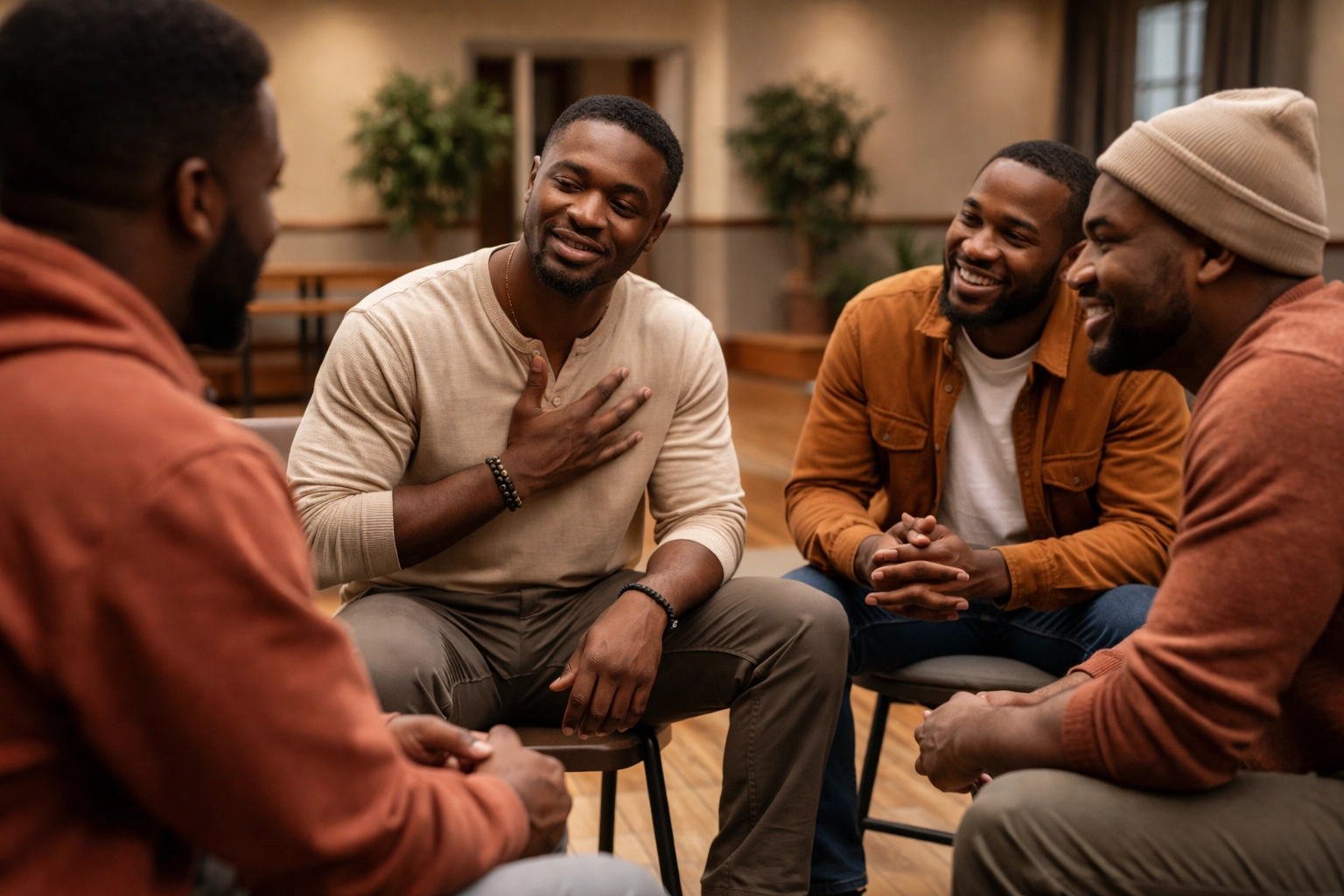
One of the most effective interventions for Black male mental health is community-based healing. Group therapy and healing circles provide safe, non-judgmental spaces where Black men can share experiences with peers who understand their struggles.
These settings accomplish several important goals:
- Dismantling isolation: Realizing you are not alone in your experiences
- Countering cultural norms: Normalizing help-seeking behavior
- Building collective resilience: Drawing strength from shared stories
Talk therapy, narrative therapy, and healing circles are particularly effective because they give Black men opportunities to discuss feelings and emotions: something many have not had the chance to do before.
If you are considering professional support, therapy designed specifically for Black men can address the unique challenges you face. Couples therapy can also provide tools to strengthen and sustain relationships rather than simply "fix" problems.
For those navigating trust issues after difficult experiences, learning how to rebuild trust after trauma offers a structured path forward.
Redefining Strength
Cultural narratives often equate masculinity with emotional stoicism. The strong man, according to these narratives, does not cry, does not ask for help, and does not show vulnerability.
This definition of strength is not only limiting: it is harmful.
True strength includes:
- The courage to acknowledge pain
- The wisdom to seek support
- The discipline to do the internal work
- The vulnerability to connect authentically with others
Healing relationships, or healing from unhealthy ones, is an act of profound strength. It requires facing uncomfortable truths and making difficult changes. It means choosing growth over comfort.
Moving Forward: Your Next Steps
Relationship healing is a journey, not a destination. Here are concrete steps to begin:
- Assess your current relationships: Identify which connections support your well-being and which drain it
- Identify one area for growth: Start small: perhaps improving communication or setting a single boundary
- Consider professional support: A licensed therapist can provide guidance tailored to your specific situation
- Connect with community: Seek out groups or spaces where Black men gather to discuss mental health openly
- Practice patience: Change takes time; celebrate small victories along the way
If you are ready to explore how therapy can support your relationship healing, starting your trauma recovery journey is a practical first step.
Building Resilience, One Relationship at a Time
Resilience is not built in isolation. It is forged through connection: with others and with oneself. For Black men navigating the complexities of modern relationships, healing is not a sign of weakness. It is the foundation upon which lasting strength is built.
The Mind and Therapy Clinic is here to support you on this journey. Our team understands the unique challenges Black men face and provides culturally sensitive care designed to empower you.
Ready to take the next step? Visit mindandtherapyclinic.com to learn more about our services or to schedule a consultation. You do not have to navigate this alone.
Posted in: Mental Health, Relationships, Black Male Wellness
Tags: Black men, mental health, relationship healing, trauma recovery, resilience, couples therapy