
Let's get real about something that's been bothering me for years as a therapist. We keep pushing traditional therapy approaches on Black male teens, wondering why they're not showing up or engaging, when the truth is staring us right in the face: what we're offering isn't working for them.
Here's a stat that should make every mental health professional pause: 44% of young Black males would rather turn to family and friends for support than seek professional mental health care. Compare that to 31% of their female peers, and you start seeing the picture. This isn't about Black male teens being "resistant" to help: it's about them being smart enough to recognize when something isn't designed for them.
Why Traditional Therapy Misses the Mark
Traditional therapy was built on a foundation that never considered the lived experiences of Black male teens. Think about it: most conventional approaches still operate from a deficit-based model, focusing on what's "wrong" with the person sitting in that chair rather than acknowledging the systemic issues they're navigating every single day.
The historical context here matters more than most people realize. Since 1848, medical professionals have been getting it wrong when it comes to Black mental health, even claiming that enslaved Africans were "immune to mental illness." That legacy of dehumanization didn't just disappear: it's still showing up in how Black male teens experience and perceive mental health systems today.

When we pile on top of that the fact that young Black males experience greater concerns about stigma than their female peers, it becomes clear why the traditional therapist's office feels unsafe or irrelevant to so many. The approach that works for suburban white teens isn't automatically going to work for a Black male teen dealing with racial profiling, educational inequities, and community trauma on top of typical adolescent challenges.
Here's another reality check: between 50-76.5% of Black youth have unmet mental health service needs. That's not because help doesn't exist: it's because the help that exists often doesn't fit.
What Actually Works: Culturally Responsive Approaches
So what does work? The approaches that are making a real difference start with a completely different foundation. Instead of asking "what's wrong with this teen," they ask "what has this teen survived, and how can we build on their existing strengths?"
Strength-based interventions are showing real promise. These models focus on mobilizing sources of self-esteem and creating pathways for sustained self-efficacy. For Black male teens, this might mean recognizing their academic achievements, their connection to Africentric values, or their role in their community and family.
Trauma-informed care that explicitly acknowledges racism represents another game-changer. This isn't about treating racism as some background issue: it's about recognizing ongoing racial trauma as a primary health concern that needs to be addressed head-on in therapy.

Motivational interviewing delivered immediately when concerns arise has shown incredible results. In one study, 100% of adolescents who completed motivational interviewing remained enrolled and attended their first depression treatment session. That's not a coincidence: when young people feel heard and empowered rather than diagnosed and pathologized, they engage.
Building Trust: The Non-Negotiable Foundation
Here's something that can't be skipped or rushed: building genuine trust and rapport. For Black male teens who've learned to be skeptical of systems that haven't served them well, this foundation is everything.
Effective therapists working with this population show genuine interest through attentive listening, open-ended questions, and emotional reflection. They use humor and storytelling to deepen connections, and they're transparent about their own limitations and learning process.
This is especially crucial when working across racial lines. Many Black youth are understandably skeptical when working with therapists from different backgrounds, so the therapist needs to do the work of proving they're trustworthy and culturally competent.
The Structure That Supports Success
Black male teens often respond better to goal-oriented, structured approaches rather than the free-form, "tell me about your feelings" model of traditional therapy. This doesn't mean they don't have feelings or don't need to process them: it means they need a framework that feels purposeful and respectful of their time and energy.

School-based mental health counseling has shown particular effectiveness for Black male youth, especially in Title I schools. This approach reduces barriers related to access and transportation while meeting teens in an environment where they already spend most of their time.
Integration with existing support systems is another key element. Rather than trying to replace the family, friends, and community connections that 44% of Black male teens prefer, effective approaches build bridges between professional support and these existing networks.
The Research Gap We Need to Talk About
Here's something that should concern every mental health professional: there's a severe lack of research specifically focused on Black male teens. A systematic review examining over 600 abstracts and 200+ full-text articles found insufficient data to even calculate effect sizes for depression treatment in young Black males.
This isn't just an academic problem: it means practitioners are working without evidence-based guidance for treating this population. When research does include Black youth, investigators rarely break down data by both race and gender, making it impossible to determine what specifically benefits Black male teens.
Practical Recommendations for Different Situations
If you're working with a teen who's resistant to traditional therapy: Start with peer support, mentorship programs, or connections with trusted community figures. Don't view this as a step down from "real therapy": view it as meeting the teen where they are.
For teens willing to try professional help: Prioritize therapists who demonstrate explicit cultural competence and use strength-based, goal-oriented approaches. Ask potential therapists directly about their experience working with Black male teens and their approach to addressing racial trauma.
For families seeking support: Remember that family and community connections are legitimate sources of healing, not alternatives to "real" treatment. The most effective professional support will integrate with these existing networks rather than compete with them.
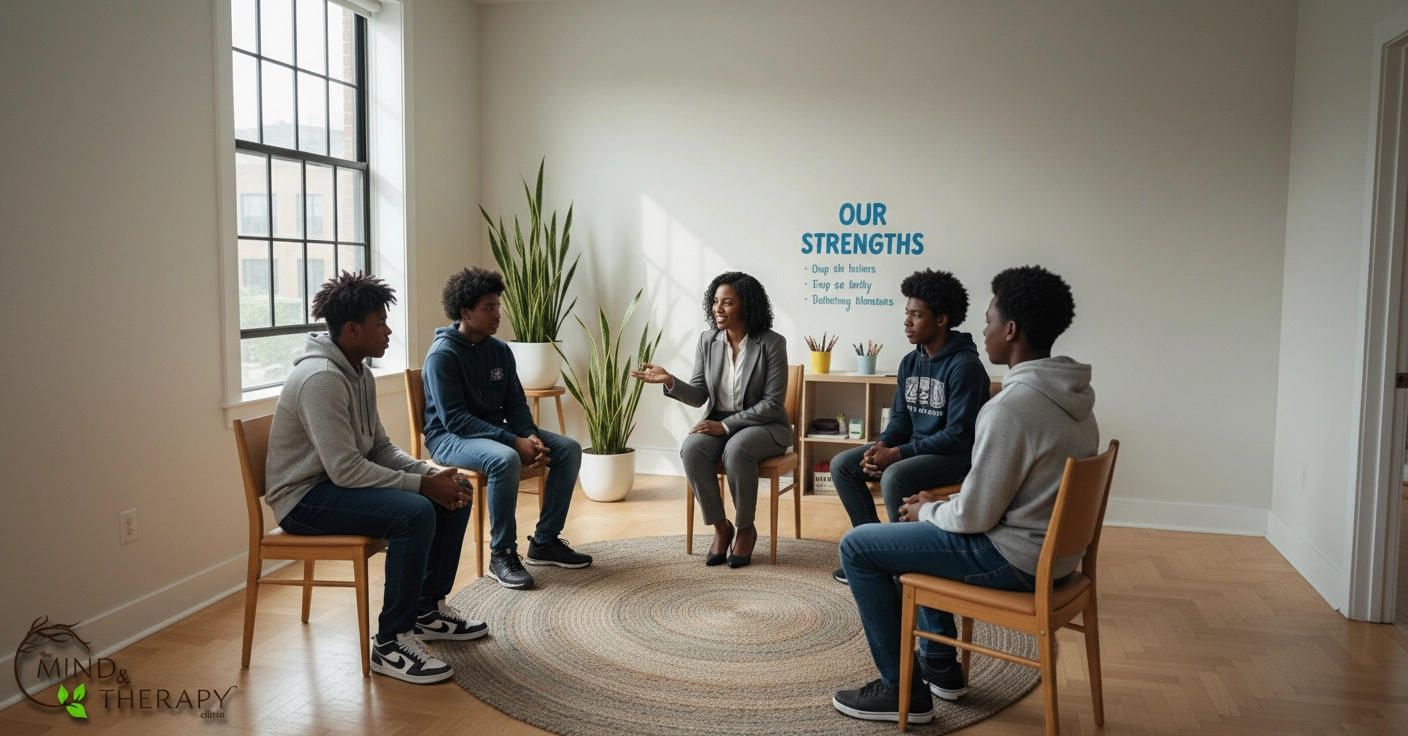
For urgent mental health needs: While culturally responsive care remains essential, don't delay intervention waiting for the perfect cultural match. The priority is connecting teens with trauma-informed providers who acknowledge racism's impact and commit to building trust through validation and empowerment.
Moving Forward: What This Means for Mental Health
The evidence is clear: traditional therapy, as typically practiced, isn't working for Black male teens. But that doesn't mean these young people don't need or want support: they're just smart enough to recognize when what's being offered doesn't fit their reality.
The future of effective mental health care for this population lies in approaches that are culturally responsive, strength-based, and explicit about addressing racism as a central rather than peripheral issue. It means therapists doing their own work to understand historical and ongoing trauma, and mental health systems being willing to fundamentally reimagine what healing looks like.
This isn't just about being culturally sensitive: it's about being effective. When we create approaches that truly serve Black male teens, everyone benefits from more responsive, trauma-informed, strength-based care.
At Mind and Therapy Clinic, we're committed to providing culturally responsive therapy that meets Black male teens where they are, builds on their existing strengths, and addresses the full scope of their experiences. Because every young person deserves mental health support that actually works for them.
Ready to explore therapy approaches that fit your teen's reality? Contact us today to learn more about our culturally responsive services designed specifically for Black male adolescents.